Call for Papers: Mediterráneo gótico: redes, artistas y formas entre Italia y la península ibérica (1320-1420), Museo Nacional Del Prado (9-11 Sept. 2026), Due 15 Jan. 2026

Call for Papers

Congreso InternacionaL

Mediterráneo gótico: redes, artistas y formas entre Italia y la península ibérica (1320-1420)

9 al 11 de septiembre de 2026, Auditorio del Museo Nacional del Prado

Fecha límite 15 de enero de 2026

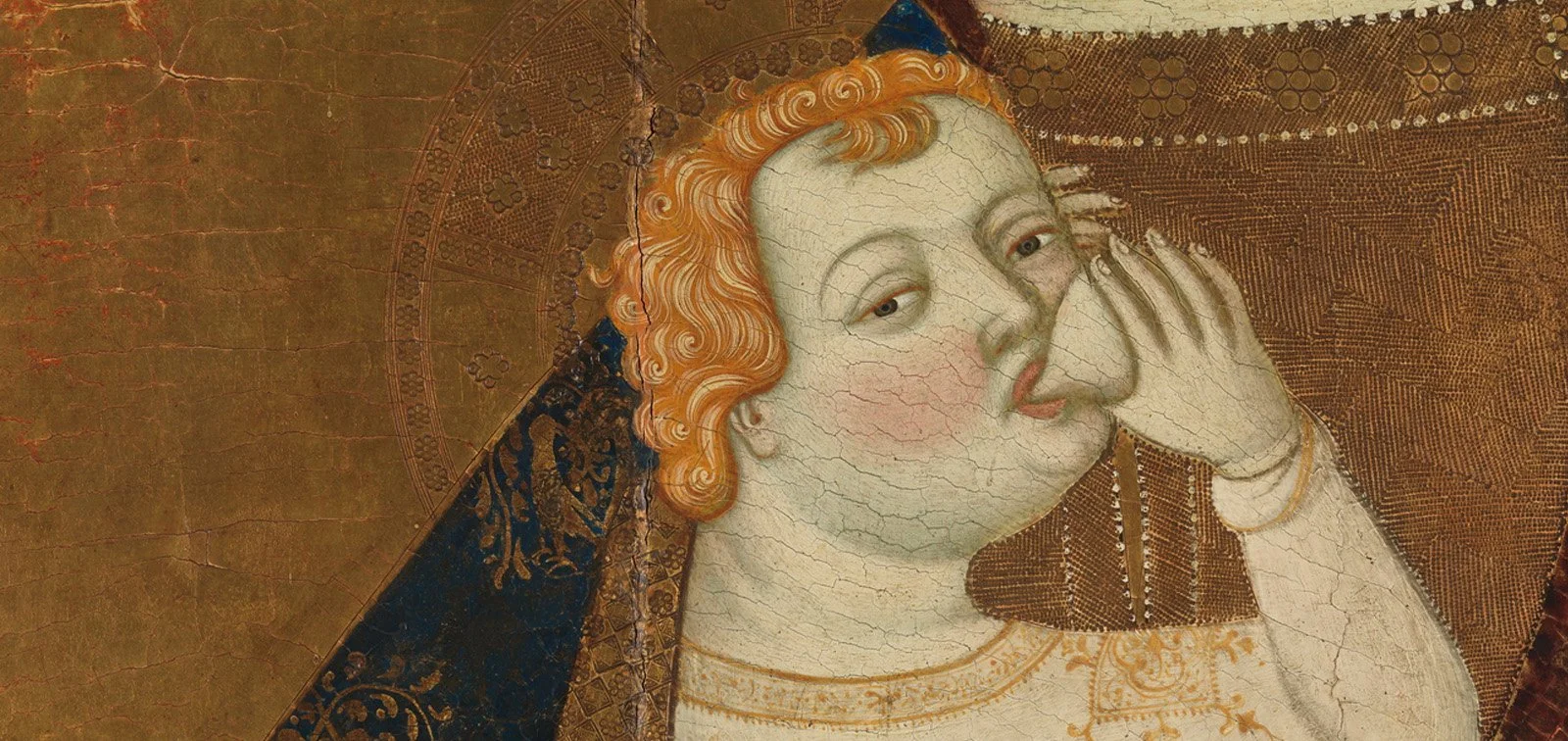
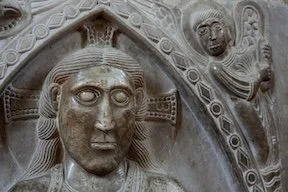
Jaume Serra, Virgen de Tobed [detalle], h. 1368 – 1371, Museo del Prado

Idiomas aceptados: Español, italiano, francés e inglés

La circulación artística en el Mediterráneo occidental y el papel que desempeñaron los modelos del Trecento italiano en la configuración del arte hispánico han adquirido un creciente interés en el ámbito académico durante las últimas décadas. Diversas investigaciones han contribuido a ampliar el conocimiento sobre los intercambios transnacionales de imágenes, técnicas y artistas en el gótico tardío, reformulando así los conceptos de frontera, originalidad e influencia. En este marco se inscribe la investigación desarrollada por el Departamento de Pintura Europea hasta 1500 del Museo Nacional del Prado, que culminará con la exposición A la manera de Italia. España y el Mediterráneo (1320–1420).

El congreso internacional que se presenta constituye una prolongación natural del proyecto expositivo y surge con el propósito de ahondar en las líneas de investigación abiertas por la muestra. Con esta iniciativa, el Museo del Prado convoca a la comunidad académica a explorar, desde un enfoque comparativo, crítico y material, las diversas formas en que el arte italiano fue apropiado, reinterpretado y adaptado en los territorios hispánicos. Concebido como una plataforma de reflexión, discusión e intercambio, el encuentro científico busca ser un espacio para el análisis tanto de obras y artistas concretos como de cuestiones históricas y teóricas más amplias: la circulación de formas, técnicas y artistas; las redes diplomáticas, mercantiles y eclesiásticas que propiciaron los intercambios; los valores estéticos y semánticos de las técnicas artísticas; o los límites del concepto de centro y periferia en el estudio del arte medieval.

Como sede de la exposición que ha dado origen a esta reflexión, el Prado respalda esta propuesta con el objetivo de promover un espacio de diálogo interdisciplinario que enriquezca la lectura del arte del gótico tardío desde una perspectiva genuinamente mediterránea.

Se invita a los participantes a enviar un resumen (máx. 2.000 caracteres, espacios incluidos) acompañado de un breve CV (máx. 1.500 caracteres, espacios incluidos) y un mínimo de tres palabras clave a: congreso.maneradeitalia@museodelprado.es
La solicitud será evaluada por el comité científico.

Fecha límite para la presentación de propuestas: 15 de enero de 2026

Para obtener más información, visite https://www.museodelprado.es/recurso/congreso-internacional-mediterraneo-gotico-redes/db869661-ded3-495d-8956-60c2c8b57681

Exhibition: 'Gold: Enduring Power, Sacred Craft', Norton Simon Museum, Pasadena, CA, 24 Oct. 2025 – 16 Feb. 2026

Exhibition

Gold: Enduring Power, Sacred Craft

Norton Simon Museum, Pasadena, CA

October 24, 2025 – February 16, 2026

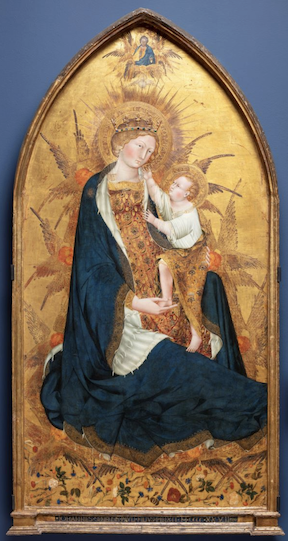
Giovanni di Paolo (Italian, 1403-1482), Branchini Madonna, 1427, Tempera and gold leaf on panel, 72 x 39 in. (182.9 x 99.1 cm), The Norton Simon Foundation

This exhibition explores the artistic and cultural function of gold in approximately 60 works of art drawn from across the collections of the Norton Simon Museum, which encompass South and Southeast Asia, Europe, North Africa and North America. This compelling group of objects, spanning from around 1000 BCE to the 20th century, reveals unexpected intersections in the circulation, craft and meaning of gold across time and place.

Gold’s elemental nature lends significance to many of the artworks on view in the exhibition. In the realm of religious art, the metal’s malleable yet incorruptible quality enabled artists to create enduring images of devotion. Gilt Hindu and Buddhist sculptures from the 12th to 20th centuries were commissioned by donors to emphasize the spiritual attainments and deified status of various religious figures. The gold on these objects represents one of the highest forms of offering, in terms of both economic and aesthetic value, and it was intended to accumulate merit and provide protection for devotees. Intricate details wrought by the hands of skilled artisans centuries ago are still preserved in the corrosion-resistant metal, which ensured the longevity of the object’s splendor and spiritual power. In 14th- and 15th-century Europe, artists of Christian images used extraordinarily thin, hammered gold leaf to create shimmering divine realms, an effect once dramatically enhanced by candlelit churches and private altars.

Gold’s rarity, and the expertise required to harness it as a medium, contributed to its impact as a visual expression of power. The objects in this exhibition were crafted from metal excavated from mines across three continents and transported over vast regions, often in the form of currency. In the hands of trained craftspeople, this processed gold was transformed into jewelry that adorned Roman patrician women or spun into thread that was then woven into textiles for elite patrons in Europe and Asia. The long historical thirst for gold motivated California’s own extractive 19th-century mining practices, the legacy of which is explored through photographs by Ansel Adams and Edward Weston.

New technical analysis conducted for this exhibition helped to identify the objects’ fundamental material properties, which provoked further questions about their significance—are these works actually gold, and what does it mean if they are not? In some cases, gilding versus solid gold becomes an issue, because it is the purity and preciousness of the material itself that gives these objects power. Alternatively, when “gold” is created through the treatment of another metal such as brass, or by skillful illusionistic painting, the gleaming effect and impressive artistic alchemy become more important than the raw materials.

Organized on the occasion of the Museum’s 50th anniversary, a milestone traditionally associated with this metal, Gold: Enduring Power, Sacred Craft invites fresh inquiry into the nature of gold as an artistic medium. In the process, the exhibition generates new conversations about the cultural and material resilience of these objects, many of which will be displayed together for the first time.

For more information, visit https://www.nortonsimon.org/exhibitions/2020-2029/gold-enduring-power-sacred-craft

Lecture: Serene and Resplendent: Asian Gold at the Norton Simon Museum, Emma Natalya Stein, at Norton Simon Museum, Pasadena, CA, 10 Jan. 2026, 5-6pm

Lecture

Serene and Resplendent: Asian Gold at the Norton Simon Museum

Emma Natalya Stein

Associate Curator of Southeast Asian and South Asian Art, National Museum of Asian Art, Smithsonian

Norton Simon Museum, Pasadena, CA

Saturday, January 10, 2026, 5:00-6:00 pm

Gilt, pressed, painted or cast, gold has expressed power, prosperity, purity and transcendence throughout the history of Asian art. From gilt-bronze sculptures of Hindu and Buddhist deities to courtly paintings and items of personal adornment, gold has enjoyed a range of uses and enduring significance, from China to Nepal. In this richly illustrated talk, Stein delves into the Asian works on view in the exhibition Gold: Enduring Power, Sacred Craft and discovers more gold in the Museum’s South and Southeast Asian collections.

Advance tickets for members are available using the link below.
Tickets for all guests will be available for walkups on the day of the lecture starting at 4:00 p.m.

For more information and to register, visit https://www.nortonsimon.org/calendar/2026/winter-2026/Serene-and-Resplendent-Asian-Gold-at-the-Norton-Simon-Museum-1-10-2026-500pm

Lecture: Art and Arbitrage: Gold across the Mediterranean in the Middle Ages, Sarah M. Guérin, at Norton Simon Museum, Pasadena, CA, 7 Feb. 2026 5-6PM

Lecture

Art and Arbitrage: Gold across the Mediterranean in the Middle Ages

Sarah M. Guérin

Associate Professor of Medieval Art, History of Art Department, University of Pennsylvania

Norton Simon Museum, Pasadena, CA

Saturday, February 7, 2026, 5:00 pm – 6:00 pm

During the European Middle Ages, silver was more abundant for the northern shores of the Mediterranean, whereas coastal North Africa enjoyed easier access to gold via trans-Saharan trade. Each had something the other wanted, and sought to leverage the system to their own advantage. This differential led to rivalry, subterfuge and even war, with the Crusade to Tunis in 1270 being largely spurred and motivated by a thirst for gold. In addition to their use for exchange and coinage, gold and silver were artists’ materials, and their paucity or abundance profoundly shaped artistic practice. In this lecture, Guérin reveals how this valuable metal influenced both historical events and artistic production.

Advance tickets for members will be released on January 7.

For more information, visit https://www.nortonsimon.org/calendar/2026/winter-2026/Art-and-Arbitrage-Gold-across-the-Mediterranean-in-the-Middle-Ages-2-7-2026-500pm

Exhibition: Late Medieval European Blockbooks: The First Printed Picture Books, The Morgan Library & Museum, New York City, November 6, 2026 to May 16, 2027

Current Exhibition

Late Medieval European Blockbooks: The First Printed Picture Books

The Morgan Library & Museum, New York City

November 6, 2026 through May 16, 2027

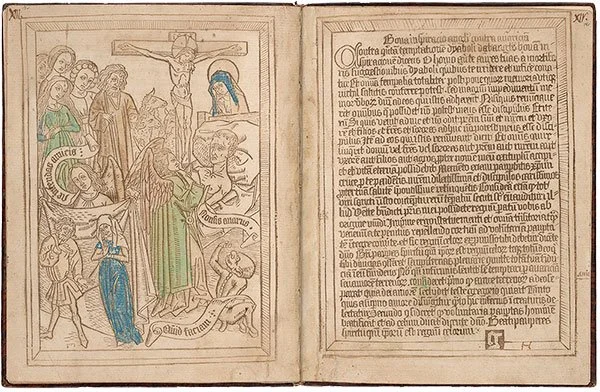
Ars moriendi (Blockbook). Netherlands (or Lower Rhine), approximately 1467–1469. Purchased on the Gordon N. Ray, Curt F. Bühler, L. Colgate Harper D-1, and Henry S. Morgan Reference Funds, and as the gift of T. Kimball Brooker, Martha J. Fleischman, Mr. G. Scott Clemons and Ms. Karyn Joaquino, Marguerite Steed Hoffman and Tom Lentz, and Mr. and Mrs. Larry R. Ricciardi, 2022. The Morgan Library & Museum, PML 198786. 

This exhibition will highlight the short period in European book history (1450–80) when blockbooks competed with hand-written and typographically-printed books as commercial products for readers.

Blockbooks, now often referred to as “medieval graphic novels,” were highly illustrated books printed entirely from woodcuts (text and image together). As such, they were the first print-on-demand books in the West. While some works maintained texts and imagery popular from manuscript tradition, block cutters and printers also produced new and innovative texts specifically designed for the medium. Ultimately, the cumbersome production process of woodcut-book printing was surpassed by the greater capabilities of typographic printing that integrated woodcuts, and the blockbook genre had largely died out by 1480. This thirty-year span, however, reveals a critical moment in European book history as the increasing demand for books led to inventions and experimentation in book production.

The Morgan holds the largest collection of blockbooks in the United States. A highlight of this exhibition will be the Ars moriendi blockbook, a rare copy printed in the Netherlands about 1467–69. In 2022, the Morgan acquired fifteen leaves of this blockbook that had been held in a private collection. Remarkably, the Morgan already possessed the remaining nine leaves—purchased by J. Pierpont Morgan in 1902. This acquisition reunites the two parts, forming the only known complete copy of this monument to early European printing.

Organized by John McQuillen, Associate Curator, Department of Printed Books and Bindings.

For more information, visit https://www.themorgan.org/exhibitions/blockbooks

Call for Papers: Women Religious: Patronage and Networks from Medieval to Modern, Queen Mary University of London (11-12 June 2026), Due 30 Jan. 2026

Call for Papers

Women Religious: Patronage and Networks from Medieval to Modern

Queen Mary University of London, 11-12 June 2026

Due 30 January 2026

The History of Women Religious in Britain and Ireland annual conference will take place at Queen Mary University of London on the 11 and 12 June 2026 with the broad theme of: ‘Women Religious: Patronage and Networks from Medieval to Modern’.

We welcome papers on the following or related topics:

  • Transpational and/of national netwotks

  • Collaborations between female religious congregations and communities

  • * Relationships with the secular and regular dergy

  • Relationships with lay pattons

  • Family and friendship networks

  • Pinancial nerworke and economic patronage

  • Calcural networka

  • Digital networks

  • Network analysis

  • Queer nerworke

  • Missions as networks opirtual bones belween women religious and the wider community

  • The role of lay and choir sistere

  • Almsgiving and charitable networks

Abstracts of between 250-300 words together with a short biography may be sent to: hwrbi.conference@gmail.com on or before Friday, 30 January 2026.

H-WRBI encourages participants from all career stages and international participants

Call for Panels & Papers Extension: Small Worlds, Big Worlds, 9th International Conference of the Society for the Medieval Mediterranean (Lisbon, 22-25 June 2026), Due by 15 Dec. 2025

Call for Panels & Papers Extension

The Ninth International Conference of the Society for the Medieval Mediterranean (SMM)

Small Worlds, Big Worlds: Medieval Mediterranean Perspectives

22-25 June 2026, Lisbon

Due by 15 December 2025

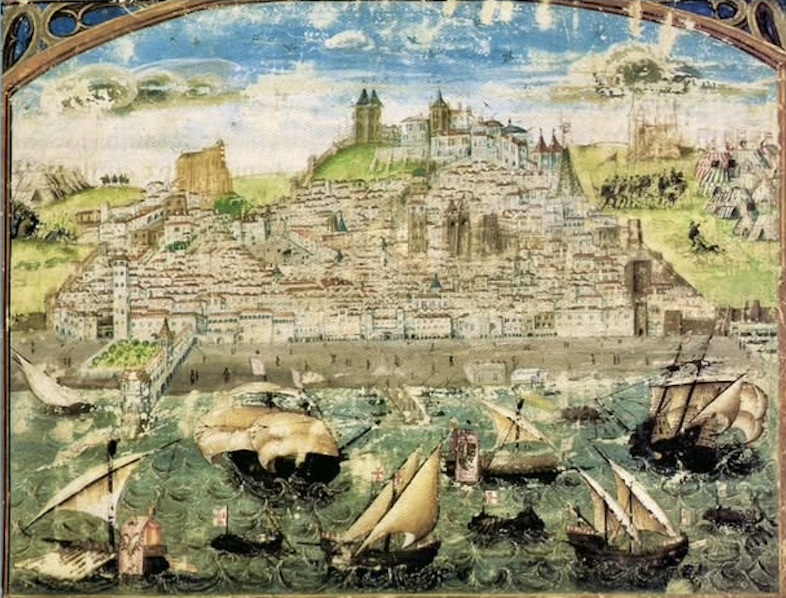
Image: Oldest known view of Lisbon (circa 1500-1510), miniature from the Crónica de Dom Afonso Henriques de Duarte Galvão: source Wikimedia Commons

The medieval Mediterranean comprised a plethora of different and diverse 'worlds': literally from small farmsteads and cloistered religious communities to large cities and networks of trade; and conceptually from worldviews that comprehended little beyond their immediate locale to those who journeyed widely or studied, thought, and collected knowledge broadly. The variation in scope, scale, nuance and complexity shaped perspectives and phenomena, affected communication and understanding, influenced interactions and exchange, and facilitated or exacerbated peace and conflict.

For its Ninth International Conference, the SMM invites proposals for panels and papers that explore the medieval Mediterranean through the theme 'Small Worlds, Big Worlds: Medieval Mediterranean Perspectives! This should be interpreted broadly, literally and figuratively, from a range of disciplinary perspectives to consider actual and conceptual 'worlds' in the medieval Mediterranean.

We invite papers that examine the theme from different disciplinary perspectives, including History, Archaeology, Literary Studies, Linguistics, Art History, and Religious Studies/Theology, among others.

We welcome research papers that, through the analysis of diverse types of sources, apply innovative approaches and stimulate debates that will enhance our understanding of 'worlds' in and across the medieval Mediterranean.

Topics of the conference could include, but are by no means limited to:

  • Cross-cultural contacts, interactions, assimilations, tensions and conflicts

  • Religious and linguistic interactions, e.g., of pilgrims, missionaries, merchants, sailors, travellers and scholars

  • Diplomatic interactions, e.g., of emissaries, spies, translators and merchants

  • Military interactions, e.g. of mercenaries and crusaders

  • Interactions between peoples of the Mediterranean and the wider world, e.., the Atlantic and Indian Oceans, Asia and Africa

  • Currents of intellectual thought

  • Slavery, liberty and captivity

  • Pirates, renegades and rule-breakers

  • Migration, movement and settlement

  • Material evidence of exchange and interactions

  • Construction and/or deconstruction of identities'

  • Narrative, visual and material depictions of the everyday and the commonplace

Applicants are encouraged to submit proposals for panels of three 20-minute papers each for 1.5 hour sessions, and should nominate a chair. We will do our best to accommodate applications for individual papers, but panels will be prioritised.

Language: Papers will be delivered in English. However, panel chairs will be allowed to accept discussions in any other language, if able to guarantee translation into English.

Deadline:

Panel proposals in the form of a session title, session abstract (150-200 words), 3 paper titles with short abstracts (100-150 words), and the name of a nominated chair should be submitted to socmedimedit@gmail.com by 15 December 2025.

Individul paper proposals should be in the form of a paper title and short abstract (100-150 words) should be submitted to socmedimedit@gmail.com by 15 December 2025.

Funded by national funds through the FCT - Foundation for Science and Technology, I.P., under the Multiannual Funding of the Institute for Medieval Studies - Reference UID/749/2025

Call for Papers: Close Enounters, 5th Oslo Student Conference on Medieval Europe, Oslo (12-14 Mar. 2026), Due by 12 Dec. 2025

Call for Papers

5th Oslo Student Conference on Medieval Europe

Close Encounters

12-14 March 2026 Oslo, Norway

Due by 12 December 2025

The Oslo Student Conference on Medieval Europe is an interdisciplinary conference on the study of the Middle Ages in Europe. We invite students at all levels to submit abstracts for a hybrid session held at the University of Oslo. This conference aims to provide an opportunity for Bachelors, Masters, and Doctoral students, as well as those who recently graduated, to present their research. We especially welcome those who have not presented a paper at a conference before.

Whether with family, other cultures, or the spiritual, encounters of all kinds abound in the sources left to us from the Middle Ages. Families are feuding in Medieval Iceland, friendly and not-so-friendly Vikings arrive on the British Isles, and an Irish monk details an encounter with someone from the Otherworld. In many ways, the meetings between people shaped the way they understood the world. The Middle Ages were a time of change, both cultural and religious, and this change comes to light when examining interactions between people. This year, we invite you to explore the theme of close encounters of a medieval kind with us.

Examples of topics:

  • Transmission of Knowledge

  • Cultural Encounters

  • History from Below

  • Communities of Practice

  • Medievalisms

  • Global Middle Ages

  • Tradition vs Innovation

  • Folklore

  • Conversion

  • We also invite abstracts on other topics.

A proceedings volume of this conference will be published through the university's e-publishing portal.

Abstracts must not be longer than 250 words. Please also include a title, your name, home university, study program, and whether you plan on presenting in person or online. Papers will be 20 minutes + 10 minutes for questions. Please submit your abstract before the 12th of December 2025 to oslomedievalstudentconference@gmail.com. For questions, please contact us at the same email address.

Call for Papers Extension: Sounds & Silence, Oxford Medieval Graduate Conference (OMGC) (23-24 Apr. 2026), Due by 15 Dec. 2025

Call for Papers Extension

Oxford Medieval Graduate Conference (OMGC) 2026

Sounds & Silence

Maison Française d'Oxford, 23-24 April 2026

Due by 15 December 2025

To give prospective speakers additional time to prepare their proposals, the Oxford Medieval Graduate Conference has extended its Call for Papers deadline to 15 December 2025.

Submissions are welcome from all disciplinary perspectives, including historical, literary, musical, archaeological, linguistic, and interdisciplinary approaches. Papers may address any geographical focus or subject related to the medieval period on the broad topic of ‘Sounds and Silences.’

Areas of interest may include, but are not limited to:

  • Vernacular song and folk music

  • Representations of sound and silence

  • Liturgical traditions

  • Monastic worship and silence

  • (Non)verbal (mis)communication

  • Taboo and censure

  • Vocalizations and orality

  • Linguistic change

  • Cultures of listening

  • Material culture of sound

  • Architecture and acoustics

  • Noises of nature

  • Soundscapes

  • Cosmological harmonies

  • Somatic and sensory experience

  • Epistemologies of sound

We welcome applications from graduate students at any university; a limited number of travel bursaries will be available to accepted presenters. We ask that all presenters attend in person, with hybrid participation available for attendees who cannot travel to the event.

Submission Guidelines

Papers should be no longer than 20 minutes. Please submit abstracts of 250 words to oxgradconf@gmail.com by 15 December 2025.

Call for Papers: The Symposium on Crusade Studies, Saint Louis University, MO (10-11 Apr. 2026), Due by 31 Dec. 2025

Call for Papers

The Symposium on Crusade Studies

April 10 – 11, 2026, St. Louis, MO
Saint Louis University, Missouri Campus

Due by December 31, 2025

The Symposium on Crusade Studies is sponsored by the Crusade Studies Forum at Saint Louis University. Founded in 2006, the Forum is proud to celebrate its twentieth anniversary this upcoming year. The Symposium welcomes proposals for scholarly papers, complete sessions, and roundtable discussions on all topics related to the medieval crusading movement. Papers are typically twenty minutes in length, and sessions are scheduled for ninety minutes.

Abstracts of 250 words and session proposals should be submitted online at http://www.crusadestudies.org/symposium-on-crusade-studies.html The deadline for submission is December 31, 2025. Late submissions will be considered if space is available. Decisions will be made by the end of January, and the program will be published in February.

For more information, or to submit your proposal, go to
http://www.crusadestudies.org/symposium-on-crusade-studies.html

Contact: Evan S. McAllister at crusades@slu.edu

Call for Applications: Student Scholarship for 2026 BAA Romanesque Conference in Toulouse, Due by 31 Jan. 2026

Call for Applications

2026 BAA Romanesque Conference in Toulouse

Student Scholarship

Due by 31 January 2026

A limited number of scholarships for students are available to help cover their cost of the 2026 Romanesque Conference in Toulouse: Transmission, Reception and Imitation in Romanesque art and architecture.

Please apply by 31  January 2026, attaching a short CV along with the name and contact details of one referee. Applications should be sent to: rplant62@hotmail.com

It would not be possible to mount this conference without John Osborn, and the British Archaeological Association wishes to take this opportunity to thank him for the boost to Romanesque scholarship afforded by his great generosity. For more information about this conference, head over to the conference event page.

Call for Applications: Mary Jaharis Center Grants 2026–2027, Due 1 Feb. 2026

Call for Applications

Mary Jaharis Center Grants 2026–2027

Due February 1, 2026

The Mary Jaharis Center for Byzantine Art and Culture is pleased to announce its 2026–2027 grant competition.

Mary Jaharis Center Co-Funding Grants promote Byzantine studies in North America. These grants provide co-funding to organize scholarly gatherings (e.g., workshops, seminars, small conferences) in North America that advance scholarship in Byzantine studies broadly conceived. We are particularly interested in supporting convenings that build diverse professional networks that cross the boundaries of traditional academic disciplines, propose creative approaches to fundamental topics in Byzantine studies, or explore new areas of research or methodologies.

Mary Jaharis Center Dissertation Grants are awarded to advanced graduate students working on Ph.D. dissertations in the field of Byzantine studies broadly conceived. These grants are meant to help defray the costs of research-related expenses, e.g., travel, photography/digital images, microfilm.

Mary Jaharis Center Publication Grants support book-length publications or major articles in the field of Byzantine studies broadly conceived. Grants are aimed at early career academics. Preference will be given to postdocs and assistant professors, though applications from non-tenure track faculty and associate and full professors will be considered. We encourage the submission of first-book projects.

Mary Jaharis Center Project Grants support discrete and highly focused professional projects aimed at the conservation, preservation, and documentation of Byzantine archaeological sites and monuments dated from 300 CE to 1500 CE primarily in Greece and Turkey. Projects may be small stand-alone projects or discrete components of larger projects. Eligible projects might include archeological investigation, excavation, or survey; documentation, recovery, and analysis of at risk materials (e.g., architecture, mosaics, paintings in situ); and preservation (i.e., preventive measures, e.g., shelters, fences, walkways, water management) or conservation (i.e., physical hands-on treatments) of sites, buildings, or objects.

The application deadline for all grants is February 1, 2026. For further information, please visit the Mary Jaharis Center website: https://maryjahariscenter.org/grants.

Contact Brandie Ratliff (mjcbac@hchc.edu), Director, Mary Jaharis Center, with any questions.

Call for Participants in Workshop: Tractive Forces: Potentials of Art in the Trecento, Warburg-Haus and CAS, Hamburg (6-8 May 2026), Due by 15 Dec. 2025

Call for Participants in Workshop

Tractive Forces: Potentials of Art in the Trecento

6-8 May 2026, Warburg-Haus and CAS, Hamburg

Due by 15 December 2025

The CAS »Imaginaria of Force« (UHH) invites applications for the workshop »›Tractive Forces‹ Potentials of Art in the Trecento«, which will take place from May 6 to 8, 2026 at the Warburg-Haus in Hamburg as well as the seminar room of the CAS »Imaginaria of Force«.

Pull, draw, attract, and captivate. The question of »tractive forces« in fourteenth-century Italian art has so far received only limited scholarly attention. Yet these forces illuminate qualities that allow us to examine production processes, materiality, and mediality, as well as motifs and their beholders, in their physical, metaphysical, technical, and aesthetic dimensions. It is not by chance, we hypothesise, that Francesco Petrarca speaks of a “force” (vis) in his Remedies for Fortune Fair and Foul (De remediis utriusque fortunae, 1350–1366) to warn his readers of the power of art – its capacity to make beholders “cling” (inhaere) to paintings and even to “capture” (capere) their intellect.

The workshop takes such »tractive forces« in an expanded sense as its point of departure, bringing art-historical analyses into dialogue with approaches from the history of science, literature, and philosophy. How are »tractive forces« modelled in Trecento works of art? Are they primarily derived from iconographic sources, or do they reveal a particular interest in tracing visible and invisible chains of effect? To what extent does this perspective allow us to consider works of art in relation to their reception? What visual strategies and technical procedures are adopted, refined, or developed to depict and generate pull and attraction? What roles do architectures, frames, and other devices (such as curtains, parapets, and grilles) play in the dynamics of attraction and distancing? Which literary, rhetorical, natural-philosophical, or moral-theological considerations underlie these dynamics?

Please send your proposals, including an abstract of no more than one page and the keyword »Tractive Forces« in the subject line, by December 15, 2025 to: imaginarien.der.kraft@uni-hamburg.de.

Click the following link to access a PDF of the Announcement of the Workshop »›Tractive Forces‹ Potentials of Art in the Trecento«

Call for Papers: Perspective, actualité en histoire de l’art, n° 2027 – 1, Figures of Naturalism, Due by 12 Jan. 2026

Call for Papers

Perspective

actualité en histoire de l’art, n° 2027 – 1

Figures of naturalism

Due by 12 January 2026

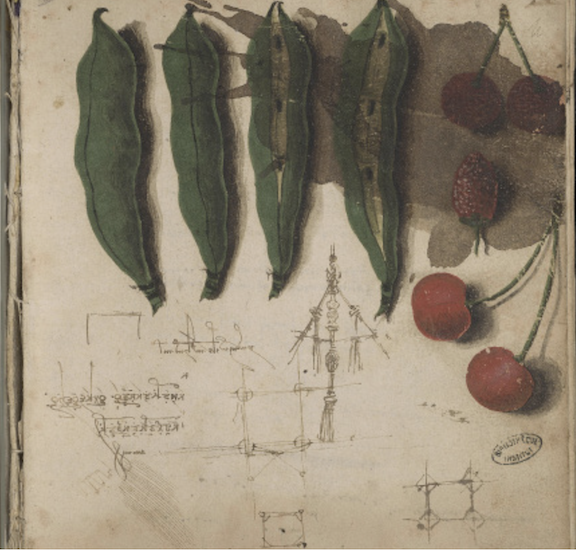
Leonardo da Vinci, Broad Bean Pods, Cherries, and Wild Strawberry, Manuscript B, c. 1487–89, detail from a paper notebook illustrated with drawings and sketches, parchment cover, 24.4 × 17 cm (page), Paris, Bibliothèque de l’Institut de France (Ms 2173), fo 3 ro.

At a time when ecology has become a major preoccupation and a key issue in political, economic and social terms alike, art historians have resolutely taken on the questions it raises through a profound renewal of their approach to nature. Can we speak of a new naturalism in art history?

In line with its editorial policy focused on the history of the discipline, Perspective has chosen to devote its next issue to naturalism, a complex question which goes beyond the framework of art history in various respects and one which its practitioners have approached in multiple ways. The theme is eminently topical, given its resonance with the ecological issues that are now at the forefront of political debates, as well as research in the natural and social sciences and the humanities. Naturalism is thus one of the concepts at the intersection of art history, other scholarly disciplines and social issues that Perspective seeks to highlight. The objective of this issue is to trace the use of naturalism in the history of art and explore the changes in the concept that have most marked the discipline in recent years by examining the most varied time periods and cultural areas possible.

The term “figures”, in the geometrical and metaphorical sense of forms, singular historical and cultural configurations, calls for identifying, investigating and understanding the different definitions of naturalism that the history of art has produced, depending on their specific intellectual contexts. We are therefore particularly interested in proposals based on a reflexive historiographic, theoretical or methodological approach to the concept.

1. THE NATURALIST SCHOOL: A 19TH-CENTURY ARTISTIC MOVEMENT

First of all, we are interested in the naturalist school of painting as it was
defined in the second half of the 19th century (Castagnary, [1857-1870] 1892); David-Sauvageot, 1889; Thomson, 2021) with regard to painters such as Gustave Courbet and Théodore Rousseau, who sought truth in nature,
relied on modern rationalism and strove for a more just representation of society. The term thus took on a political and moral connotation in that those supporting the school often shared socialist ideas and those who opposed it (cf. the criticisms waged against Émile Zola, the leading figure of the naturalists in literature) reproached its indulgence for crude images of the dregs of society. The questions raised here might include the discourse promoting this artistic movement (how it differs, for example, from realism), its justifications (what “nature” are we speaking about?) and its theoretical and historical extent (for Jules-Antoine Castagnary, naturalism went back to Cimabue); its possible origins in the artistic literature (e.g., Giovan Pietro Bellori’s disdainful qualification of Caravaggio’s followers as “naturalisti” in L’Idea del pittore, dello scultore e dell’architetto [1664]; see his Vite de’ pittori, scultori et architetti moderni,
ed. E. Borea, Turin, 1976: 21-22), or rather, in the natural sciences (since the 18th century, “naturalists” have primarily designated scholars studying nature).

2. NATURALIST ARTS AND SCIENCES OF THE PAST

A second research area concerns naturalist representations aimed at studying and promoting nature as a physical reality. In its first complete edition (1694), the dictionary of the Académie française defined a “naturalist” as a person who, like Aristotle, was devoted to the study of nature. In this sense, naturalist artists and scholars would be observers of plant and animal life, rock formations, oceans and stars, bacteria and insects, who employ their knowledge to represent the visible. While this field has been well explored since the pioneering studies of Erwin Panofsky on Galileo (Panofsky, 1954) or Ernst Kris on the rustic style (Kris, [1926] 2023), it has undergone many changes and has been considerably developed in recent years (Felfe, Sass, 2019). Studies on naturalist artists have helped to extend the boundaries of the discipline by considering topics that had long been ignored by art historians, such as late medieval marginal illustrations (Tongiorgi Tomasi, 1984), the arts of 16th-century gardens (Battisti, 1972; Brunon, 2001), scientific illustration from the 16th to the 18th century (aCkerman, 1985; O’Malley, Meyers, 2008) and taxidermy or fishkeeping in the 19th century (Laugée, 2022; Le Gall, 2022). Wildlife art, which was not highly regarded in the past, is now enjoying renewed interest among researchers who compare this production to knowledge about domestic and wild animals during the same period. The question here is how such studies challenge art history’s conventional hierarchies and enrich the discipline.

3. NATURALISM AS A FUNDAMENTAL PRINCIPLE OF ART

Third, naturalism seems to have become a widely used principle in art history during the first half of the 20th century, no longer to designate a specific school of painting but as one of the fundamental principles of artistic expression. Certain authors thus pointed to naturalist trends in medieval art (Dvořák, 1919; White, 1947) or ancient art, and describing an artwork as naturalist had almost become a compliment, as well as a sign of modernity. According to David Summers, this radical approach to visual naturalism was based on a presumed correspondence between the elements of the art in question and those of optical experience (Summers, 1987: 3). Briefly stated, in 1920, any work that appeared to be an imitation of reality could be described as naturalist. For the purposes of the present issue, we would be interested in a review of the debates that opposed the major art historians of that period concerning the origins of naturalism and its underlying rationales: can we speak of progress in the arts according to their degree of naturalism? Does the desire to imitate nature mean seeking to function in the same way, to know it, master it, or discover its aesthetic qualities? Is the source of artistic naturalism to be sought in universal human psychology or the material living conditions of certain societies? Has the discovery of prehistoric art overturned the convictions of art historians about the origins of the imitation of nature? What were the criticisms provoked by this extended use of naturalism, which justified its replacement or abandon? How is it treated today (kemP, 1990; Campbell, 2010; Barbottin, 2013; Guérin, Sapir, 2016; Boto Varela, Serrano Coll, McNeill, 2020)? Another issue at stake here is the distinction between mimetic practices that exist in several cultures and at different time periods and the naturalist spirit, in the sense of an undertaking aimed at the study of nature.

4. AT THE INTERSECTION OF ART HISTORY, THE NATURAL AND SOCIAL SCIENCES AND THE HUMANITIES: THE NEW NATURALISMS

It is also important to examine contemporary approaches to naturalism, in art history, the humanities and the natural sciences alike. In the history of science, philosophy and anthropology, naturalism has become a subject of investigation in its own right. How do art historians receive, utilise and/or criticise these studies? We can cite in particular science historians Lorraine Daston and Peter Galison, whose Objectivity (Daston, Galison, 2007) challenges the historical model prevailing, for example, in the work of Ernst Gombrich (Gombrich, 1960): rather than placing the representation of nature within a linear continuum (“progress”) common to art and science, between the 15th and 19th centuries, they posit a more discontinuous evolution of the regimes of truth, ways of observing and naturalistic images. Another relevant approach is that of anthropologist Philippe Descola who, in Les Formes du visible (DesCola, 2021), considers naturalism as an ontology, a way of dividing up the world intellectually. For Descola, it is typical of modern western culture and an intrinsic part of European and North American colonialism and extractivism since the 16th century, as symbolised by the form of the modern portrait and landscape. He thus seems to agree with Gombrich, whose ideas on the subject have been admirably summed up in a single phrase by James Elkins: “Naturalism is, in short, the history of western art” (James Elkins, Stories of Art, New York/ London, Routledge, 2002: 60). But where Gombrich perhaps sees a mark of western superiority, Descola finds a problem, which echoes certain political positions today.

On this point, we are particularly open to ecocritical and ecofeminist approaches to art, in order to explore the ways history draws on them and reconsider the history of the landscape, especially in terms of the concept of the Anthropocene (Arnold, 1998; Thomas, 2000; Nisbet, 2014; Demos, 2016; Patrizio, 2018; Ramade, 2022; Bessette, 2024; Fowkes, Fowkes, 2025), or to examine the museum and the ecological interventions transforming it (Domínguez Rubio, 2020; Quenet, 2024). Alongside Descola’s anthropology of nature, we have seen the emergence of artistic, visual and social narratives about human-animal relationships or the climate within the fields of animal studies or climatology (Rader, Cain, 2014; Cronin, 2018). Studies on colonialism and racism also provide a useful point of view for understanding cultural, visual and artistic phenomena such as tropicalism or primitivism (Noël, 2021). Last of all, we can note the recent spread of an art history investigating the origins of the materials used by artists or a history of decorative arts that seeks to bring out not only the aesthetic aspects of ornaments but their the economic and colonial implications. In all these areas, we would like to evaluate the contributions of the social history of animal representations and the environmental history of art as a way of studying the impact of human activity on the planet, its landscapes and its climate.

At the other end of the spectrum, however, certain specialists reject this ontological version of naturalism and its negative political implications and opt to study naturalist arts that manifest a detailed, sensitive attention to the environment (Zhong Mengual, 2021). Some of them thus maintain that a truly ecological history of the landscape should be free of all references to humans (Gaynor, McLean, 2005; Schlesser, 2016). Others, countering the idea that naturalism reflects a strictly modern, western way of thinking, apply it to prehistoric art (Moro Abadía, González Morales, Palacio Pérez, 2012; Guy, 2017), medieval art or non-western societies (Duran, 2001). In sum, we are seeking to address the contemporary debate on naturalism as a way of seeing and representing the world from the standpoint of art history.

5. A NATURAL HISTORY OF ART

The question of naturalism also leads us to consider what today’s natural sciences can contribute to the knowledge of art and its history. How do the neurosciences or behavioural psychology, for example, attempt to naturalise aesthetic responses, artistic creativity or the act of imitation (Dissanayake, 1995; Onians, 2007)? What are the bases of a natural history of art (Onians, 1996; Prévost, 2025) that places the appearance of forms in nature and art on the same level and studies the animal origins of culture (Lestel, 2001; Harkett, Hornstein, 2025)?

6. MAJOR FIGURES

A final approach entails the historiography of the prominent personalities – art critics, artists, art historians, philosophers of art, scientists coming from other disciplines – who have helped to make the concept of naturalism exist in art history. Here, intellectual biographies will allow us to study works of authors who have provided outstanding, original, noteworthy definitions of naturalism – on the one hand, individuals classified as “naturalists” (scientists who study nature), those who develop a theory or practice of art or a naturalist perspective on art, and, on the other, individuals (artists, specialists in the field of art) who identify a naturalist art. By way of example, we can cite well-known figures such as Galileo (the subject of classic studies by Panofsky [Panofsky, 1954], David Freedberg [Freedberg, 2002] and Horst Bredekamp [Bredekamp, 2007]), Charles Darwin, whose importance for the art of his time has been recognised in several recent exhibitions [Donald, Munro, 2009; Bossi, 2020]), art critic Castagnary (said to be the inventor of the “naturalist movement” in painting as of 1863 [Castagnary, (1857-1870) 1892]), Wilhelm Worringer (who considered it to be one of the two great universal trends in art, alongside that of stylisation [Worringer, (1907) 1953]). While their fascinating writings clearly deserve to be re-examined in the light of the vast bibliography now devoted to them, this issue of Perspective is also intended to draw attention to lesser-known or less prominent figures, whose unexplored contributions can allow us to reconsider the construction of naturalism as an art-historical category and reevaluate its impact.

Perspective : actualité en histoire de l’art

Published by the Institut national d’histoire de l’art (INHA) since 2006, Perspective is a biannual journal which aims to bring out the diversity of current research in art history, highly situated and explicitly aware of its own historicity. It bears witness to the historiographic debates within the field without forgetting to engage with images and works of art themselves, updating their interpretations as well as fostering intra- and inter-disciplinary reflection between art history and other fields of research, the humanities in particular. In so doing, it also puts into action the “law of the good neighbor” as conceived by Aby Warburg. All geographical areas, periods, and media are welcome.

The journal publishes scholarly texts which offer innovative perspectives on
a given theme. Its authors contextualize their arguments; using case studies allows them to interrogate the discipline, its methods, its history, and its limits. Moreover, articles that are proposed to the editorial committee should necessarily include a methodological dimension, provide an epistemological contribution, or offer a significant and original historiographic evaluation. Depending on the subject, the wider bibliographical corpus and the geographical area and time period under consideration, two types of contributions are possible:

Focus: an article based on a specific case that permits the examination of a historiographic, theoretical or methodological question of current interest (3,500-4,000 words / 20,000-25,000 characters);

Wide Angle: an essay or critical assessment addressing a broader question, an art-historical movement or a methodological or theoretical issue that takes into account recent changes in orientation or approaches on the basis of a selective bibliography (7,000 words / 40,000-45,000 characters, excluding the bibliography).

Figures of naturalism, no. 2027 – 1 Editor: Thomas Golsenne (INHA)

Editorial board/Comité de rédaction here.

Please send your proposals (a summary of 200-500 words/ 2,000-3,000 characters, a working title, a short bibliography on the subject and a brief biography) to the editors (revue-perspective@inha.fr).
Proposal deadline: 12 January 2026.

Proposals will be examined by the editorial board regardless of language (the translation of articles accepted for publication is handled by Perspective).

The authors of the pre-selected projects will be informed of the editorial board’s decision in February 2026. The full articles must be received by 1st June 2026. The texts submitted (4,000-7,000 words/25,000-45,000 characters, depending on the format chosen) will be accepted in final form after an anonymous peer-review process.

For a PDF of the Call for Papers in French, click here.

For a PDF of the Call for Papers in English, click here.
Notre-Dame de Paris special evening: Film and Conversation, 1 December 2025 in DC

Notre-Dame de Paris special evening: Film and Conversation

La Maison Française - Villa Albertine
4101 Reservoir Road
Washington, D.C., United States 20007

Monday, December 1st, 2025 6:30 pm - 9:00 pm

Full information and to register, click HERE

Join us for a conversation with Jennifer Feltman, expert on the Notre-Dame renovation and Premiere Screening of “Notre-Dame Resurrection”

Program

6:30 PM : “New Discoveries and the Rebirth of Notre-Dame: Crossed Perspectives” with Jennifer Feltman and Paul Glenshaw, followed by a Q&A

About Jennifer Feltman

Dr. Jennifer Feltman is an art historian and Associate Professor at the University of Alabama, specializing in the art and architecture of medieval Europe. A leading American scholar involved in the scientific restoration project of Notre-Dame de Paris since the 2019 fire, her research focuses on Gothic sculpture, particularly the development of complex sculptural programs in the absence of primary textual sources. Her work bridges art history, religious studies, manuscript analysis, and technical studies of construction, with a special emphasis on the 13th century, iconography, and the new discoveries revealed through the cathedral’s restoration. She frequently lectures in Europe and the United States to share major discoveries from the ongoing reconstruction.


About Paul Glenshaw, moderator

Paul Glenshaw is a writer, filmmaker, and art historian known for his work on architectural history, aviation, and cultural heritage. He collaborates with major American cultural institutions, including the Smithsonian, and is a keen observer of sacred architecture and large-scale heritage projects. Bringing his perspective as both historian and cultural mediator, he offers insightful reflections on the intersections of history, restoration, and public engagement.

7:30 PM : Premiere screening of “Notre Dame Résurrection” : 5 years at the heart of the largest restoration project, inside and outside Notre-Dame de Paris.

On December 1, 2025, French in Motion will conclude its 2025 season of “Movie Nights”. As the final screening of the season, held in partnership with Villa Albertine, the evening will feature Notre-Dame Résurrection, an exceptional documentary directed by Xavier Lefebvre and written by Alain Zenou.

Filmed over FIVE years, this documentary offers a rare insight into the extraordinary reconstruction of Notre-Dame Cathedral in Paris after the 2019 fire.

Thanks to privileged access to the construction site, hours of previously unseen footage, and exclusive interviews with the craftsmen, architects, and teams involved, the film reveals the human, technical, and artistic challenges behind one of the most ambitious restoration projects of the 21st century.

This documentary is presented in French with English subtitles, thanks to the support of TV5 Monde.

Production: Electron Libre / Kisayang / Établissement Public Notre-Dame / France TV

Year: 2024

Format: 4K UHD

Length: 1 hour 30 minutes

This screening caps off a year of programming dedicated to highlighting contemporary French and Francophone audiovisual creation, carried by the exceptional members of our community — across the United States and in France — while strengthening the ties we continue to build with the Film & TV landscape of Washington, DC.

This event is organized as part of Movie Nights by French in Motion.


Photos: By registering for this event, you consent to being photographed and/or recorded, and authorize the organizers to use your image and likeness for promotional and archival purposes.

Security Rules: Each person attending the event must have a ticket registered in their name and a government-issued ID that matches the name on the reservation to enter the Embassy. No one will be admitted without a reservation and official ID. Due to strict security measures, please arrive on time, as doors will be closed at 6:30 pm sharp. Please allow for extra time for security screenings.

For security reasons, large bags, umbrellas, backpacks, and bike helmets are not allowed on Embassy grounds. The security team may confiscate any items considered inappropriate.

Parking:
There is no on-site parking.

  • Metered parking is available on Reservoir Road at $2.30/hour (max 4h until 10pm)

  • Garage parking is available at Georgetown MedStar Health (Entrance #2, 2800 Reservoir Road NW), approx. $25 for up to 3 hours


Online Lecture: The Quarry Church at Deir al-Ganadla (Asyut, Middle Egypt) and the Lost Timber Nave, Mikael Muehlbauer, 9 Dec. 2025, 12:00-1:30PM, On Zoom

Online Lecture

2025-2026 East of Byzantium Lecture Series

The Quarry Church at Deir al-Ganadla (Asyut, Middle Egypt) and the Lost Timber Nave

Mikael Muehlbauer, Columbia University

December 9, 2025 | Zoom | 12:00–1:30 pm (Eastern Standard Time, UTC -5)

The Mary Jaharis Center for Byzantine Art and Culture and the Mashtot Chair of Armenian Studies at Harvard University are pleased to announce the next lecture in the 2025–2026 East of Byzantium lecture series.

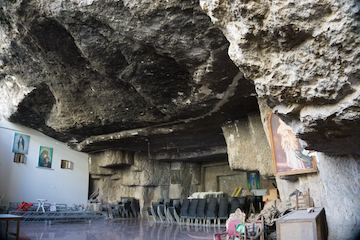
This presentation presents the little-known Quarry church of Mary at Deir al-Ganadla (near Asyut) as a tool for students of Late Antiquity to visualize lost timber-roofed basilicas in Egypt as well as the Mediterranean more broadly. The church’s value lies in its mural program, which orders the Pharaonic mine from which it was consecrated into a fictive freestanding basilica. These paintings depict painted timber ephemera from circa 500 that are largely lost to us. By fully documenting this largely unknown church and its decorative schema we may reconstruct elements of freestanding basilicas in Egypt and the wider Mediterranean which lack extant naves. Although modest, Ganadla’s import should not be understated, as it is the most in-tact Late Antique church in Egypt known.

Mikael Muehlbauer is Lecturer in the Discipline of Art History and Archaeology at Columbia University. He is a specialist in the architecture of Medieval Ethiopia, Egypt and the textile arts of the Western Indian Ocean world.

Advance registration required. Register: https://eastofbyzantium.org/upcoming-events/

Contact Brandie Ratliff (mjcbac@hchc.edu), Director, Mary Jaharis Center for Byzantine Art and Culture with any questions.

Call for Papers: Sounds and Silence, Oxford Medieval Graduate Conference 2026 (23-24 Apr. 2026, Maison Française d’Oxford), Due by 8 Dec. 2025

Call for Papers

Sounds and Silence

Oxford Medieval Graduate Conference 2026

23-24 April 2026, Maison Française d’Oxford

Due by 8 December 2025

The Oxford Medieval Graduate Conference Committee invites paper submissions for the upcoming conference on the theme of ‘Sounds and Silence’ on the 23rd and 24th of April 2026 at the Maison Française d’Oxford.

Submissions are welcome from all disciplinary perspectives, including historical, literary, musical, archaeological, linguistic, and interdisciplinary approaches. Papers may address any geographical focus or subject related to the medieval period on the broad topic of ‘Sounds and Silences.’

Areas of interest may include, but are not limited to:

  • Vernacular song and folk music

  • Representations of sound and silence

  • Liturgical traditions

  • Monastic worship and silence

  • (Non)verbal (mis)communication

  • Taboo and censure

  • Vocalizations and orality

  • Linguistic change

  • Cultures of listening

  • Material culture of sound

  • Architecture and acoustics

  • Noises of nature

  • Soundscapes

  • Cosmological harmonies

  • Somatic and sensory experience

  • Epistemologies of sound

We welcome applications from graduate students at any university; a limited number of travel bursaries will be available to accepted presenters. We ask that all presenters attend in person, with hybrid participation available for attendees who cannot travel to the event.


Submission Guidelines

Papers should be no longer than 20 minutes. Please submit abstracts of 250 words to oxgradconf@gmail.com by 8 December 2025.

In association with the Maison Française d’Oxford and Oxford Medieval Studies, sponsored by The Oxford Research Centre in the Humanities (TORCH).

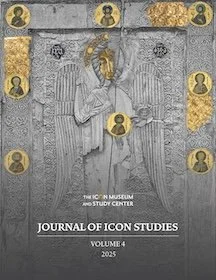
New Open-Access Release! Journal of Icon Studies, Volume 4

New Open-Access Release

Journal of Icon Studies

Volume 4

We are excited to announce the release of Volume 4 of the Journal of Icon Studies. The Journal is an open-access, peer-reviewed resource for the interdisciplinary study of icons from Byzantium to the present.

About the Volume

From the mountain-top treasuries of Georgian monasteries and the clerical collections of Enlightenment Rome to the Midwestern bequests of Cold-War diplomats, discover the fascinating stories of how Orthodox icons came into the collections of Western Europe and America. Edited by Wendy Salmond and Justin Willson.

Articles

  • ‘From Forges to Fiery Furnaces: Amy Putnam, Russian Icon Collector’ by Derrick R. Cartwright

  • ‘The Long Journey of the Jumati Medallions’ by Mariam Otkhmezuri Charlton

  • ‘Richard Hare’s Russian Icon Collection and the Persistent Lure of Byzantium in Anglo-Soviet Artistic Relations’ by Louise Hardiman

  • ‘Collecting Orthodoxy in Eighteenth and Nineteenth Century Rome: From the Collection of Agostino Mariotti (1724-1806) to the Vatican Museum (1820-Present)’ by Ginevra Odone

  • ‘Authenticity and Dissimulation in Joseph Davies Icon Collection’ by Justin Willson

For more information, visit https://www.iconmuseum.org/journal-of-icon-studies-volume-4-2025/

Exhibition Closing: Painted Pages: Illuminated Manuscripts 13th-18th Centuries, University of St. Joseph, 19 September - 13 December 2025

Exhibition Closing

Painted Pages: Illuminated Manuscripts 13th-18th Centuries

University of St. Joseph, West Hartford, CT

September 19 – December 13, 2025

This exhibition explores the golden age of handmade books. Medieval European examples include a range of Christian devotional and liturgical texts—from psalters and books of hours to choir books and lectionaries. Among the non-Western examples are seventeenth-and eighteenth-century leaves from the Koran and the Shahnameh (the Persian Illustrated Book of Kings) as well as Hebrew texts. This exhibition is organized by the Reading Public Museum, Reading Pennsylvania. At the University of Saint Joseph it is supported in part by the Karen L. Chase ’97 Fund.

For more information, visit https://www.usj.edu/about/arts/art-museum/exhibition/current/

Call for Papers: Church Archaeology Journal, Society for Church Archaeology, Due 20 Feb. 2026

Call for Papers

Church Archaeology Journal

Society for Church Archaeology

Due 20 February 2026

The SCA's peer-reviewed journal Church Archaeology is seeking submissions for its vol 26 (2026) issue. We welcome and provide initial editorial feedback on main research articles, shorter articles, news pieces, and book reviews about all kind of ecclesiastical places of worship, their burial grounds, and material culture.

Contact: editorchurcharchaeology@outlook.com

For more information, visit https://www.churcharchaeology.org/journal and https://www.liverpooluniversitypress.co.uk/journal/churcharch