ICMA Viewpoints Book Launch
Queer Making: On Artists and Desire in Medieval Europe by Karl Whittington
Online, 17 February 2026 at 12-1:00 pm ET
with Karl Whittington (Professor of History of Art, The Ohio State University)
Melanie Holcomb (Curator of Medieval Art, The Metropolitan Museum of Art), and
Roland Betancourt (Andrew W. Mellon Professor, National Gallery of Art; Chancellor’s Professor, Department of Art History, University of California Irvine)
To watch: https://www.medievalart.org/special-online-lectures
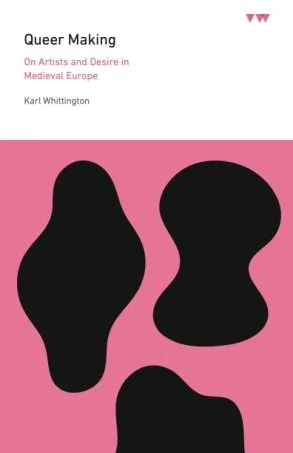
What role does desire play in the making of art objects? Art historians typically answer this question by referring to historical evidence about an artist’s sexual identity or to particular kinds of imagery. But what about anonymous artists? Or works whose subject matter is mainstream?
We know little about the identities and personalities of most premodern artists, but this should not hold us back from thinking about their embodied experience. In this book, Karl Whittington contends that we can “queer” the works of anonymous makers by thinking about their embodied experiences creating art. Considering issues of touch, pressure, and gesture across substances such as wood, stone, ivory, wax, cloth, paint, and metal, Whittington argues for an erotics of artisanal labor, in which the actions of hand, body, and breath interact in intimate ways with materials. Whittington takes seriously the agency of materials and technical processes, arguing that they necessarily placed the bodies of artists and artisans into physical situations and psychological states that can be read through the lens of desire.
Combining historical evidence with speculative description, this evocative set of essays broadens our understanding of the motivations and experiences of premodern artists. It will appeal to scholars and students of art history, medieval studies, gender studies, queer studies, and anthropology.
To purchase, visit https://www.psupress.org/books/titles/978-0-271-10042-5.html