Call for Papers: The Long Middle Ages, A New Seminar Series Hosted at the University of Leeds, Due by 28 Nov. 2025

Call for Papers

The Long Middle Ages

A New Seminar Series Hosted at the University of Leeds

Due by Friday, 28 November 2025

We are excited to announce a new interdisciplinary seminar series for postgraduate students and early career researchers on the Long Middle Ages, a period covering the Late Antique, Medieval, and Early Modern Periods. This series aims to bring together scholars working across this period to establish new connectivity and inclusivity between these disciplines, and to provide a more relaxed space for new and emerging researchers to present and test out ideas.

We welcome submissions of 20-30 minute papers from postgraduates and early career researchers working in any discipline and on any topic related to the late antique, medieval and early modern periods. Papers will be followed by time for questions and further discussion.  

Seminars will commence in early 2026 and run on a regular basis until summer. If you are interested in presenting a seminar, please send an abstract of no more than 250 words as well as a short biography to the organisers at thelongmiddleages@gmail.com by Friday 28th November 2025. 

For a PDF of the Call for Papers, click here.

All seminars will take place at the University of Leeds in a hybrid format, with fully online formats available upon request. Please provide your preference in your submission. If you have any further questions, please do get in touch! 

Mary Jaharis Center for Byzantine Art and Culture Online Lecture: Worshipping the Mother Goddess: An Underground Cult Complex in Late Antique Aphrodisias, Ine Jacobs, 2 Dec. 2025 12:00-1:30 PM (Zoom)

Online Lecture

Worshipping the Mother Goddess: An Underground Cult Complex in Late Antique Aphrodisias

Ine Jacobs, University of Oxford

Mary Jaharis Center for Byzantine Art and Culture

December 2, 2025 | Zoom | 12:00–1:30 pm (Eastern Standard Time, UTC -5)

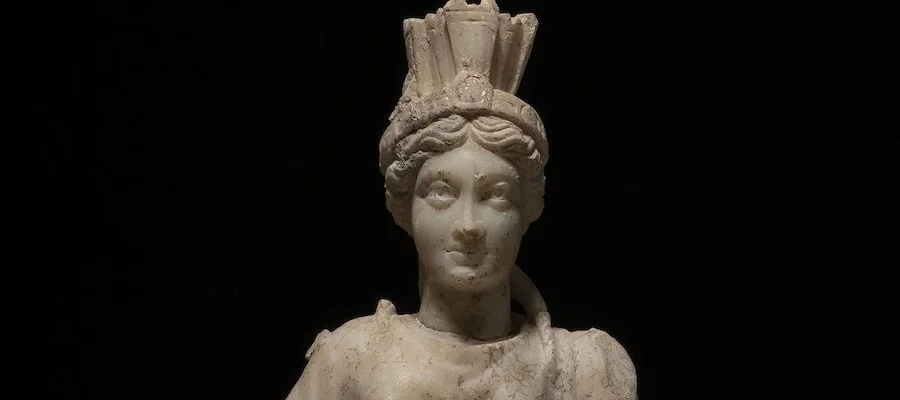
Late Antique Kybele statuette excavated from the House of Kybele, Aphrodisias. Image: © Aphrodisias excavations, photo by Ian Cartwright

The Mary Jaharis Center for Byzantine Art and Culture is pleased to announce the next lecture in our 2025–2026 lecture series.

Excavations in a suburban neighborhood of Aphrodisias have revealed a remarkably well-preserved underground cult complex dedicated to the Anatolian mother goddess Kybele. Concealed within the basement level of a large late antique private mansion—strategically positioned between the residence’s public quarters and an east–west street—the complex consists of a spacious central cult chamber, several smaller subsidiary rooms, a long subterranean corridor, and a lightwell that, in its final phase, was sealed and adapted for communal dining. To date, the sanctuary has been traced over an area of 26 by 15 meters, though it almost certainly extended further.

Originally established in the imperial period, the complex underwent several renovations in Late Antiquity, including a near-total rebuilding in the later 5th century. The sanctuary in this form remained active into the early 7th century, until the mansion that housed it was abruptly destroyed by fire in 617. Excavations have yielded a rich assemblage of cult equipment, including four statuettes of Kybele, effigies of other deities, three enigmatic “mountain busts,” amulets, numerous ceramic incense burners, ceramic and copper-alloy lamps, and copper-alloy tableware.

This presentation examines the architectural setting of the complex, structural features, cultic imagery, associated material culture, and the broader social and religious conditions at Aphrodisias that allowed pagan worship to endure into the 7th century.

Ine Jacobs is the Stavros Niarchos Foundation Associate Professor of Byzantine Archaeology and Visual Culture at the University of Oxford.

Advance registration required. Register: https://maryjahariscenter.org/events/worshipping-the-mother-goddess

Contact Brandie Ratliff (mjcbac@hchc.edu), Director, Mary Jaharis Center for Byzantine Art and Culture with any questions.

Call for Pre-Application Statement of Intent: Peter Fergusson PhD Scholarship in English Medieval Architecture, The Courtauld, London, Due by 17 Nov. 2025

Call for Pre-Application Statement of Intent

Peter Fergusson PhD Scholarship in English Medieval Architecture

The Courtauld, London

Due by 17 November 2025

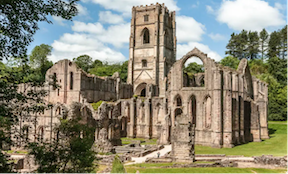
Fountains Abbey. Photo: Tom Nickson

 The Courtauld is delighted to announce a new fully funded PhD scholarship in English medieval architecture, starting in September 2026. Architecture is understood broadly to encompass the built environment, from infrastructure, urban design and domestic buildings to churches, castles and cathedrals, but may also include architectural representation or micro-architecture. Eligible projects should focus on England in the period between the eleventh and early sixteenth centuries. 

The scholarship is made available thanks to a generous bequest by Professor Peter Fergusson (1934-2022), an internationally recognised scholar of medieval architecture. The scholarship includes full home or international tuition fees, as well as an annual stipend of £22,780 to support the costs of living in London. There is also an annual allowance of £1000 to support travel for research purposes, and the possibility of financial support for the scholar to organise a conference in their final year of study.  

The Courtauld is based in central London and has one of the largest communities of postgraduate art historians in the world. The extensive faculty includes several specialists of medieval art and architecture. Further details of research specialisms and contact details are available at https://courtauld.ac.uk/faculty and details of The Courtauld’s PhD programme and its application process can be found at https://courtauld.ac.uk/phd  

Candidates are expected to have a strong postgraduate degree in a relevant field and a feasible idea for an original research project. They are encouraged to contact prospective supervisors to discuss their application at the earliest opportunity and must submit a ‘pre-application’ statement of intent by 17 November 2025, in advance of formal submission of their application by 8 January 2026

Call for Sessions and Papers: 11th Conference of the Medieval Chronicle Society, Munich (27-30 July 2026), Due by 10 Nov. 2025

Call for Sessions and Papers

11th Conference of the Medieval Chronicle Society

27-30 July 2026, Munich, Germany

Due by 10 November 2025

The 11th international conference on the Medieval Chronicle will be held in Munich, Germany, in the week of July 27th to 30th 2026. Papers in English, French or German are invited on any aspect of the medieval chronicle.

The 11th international conference on the Medieval Chronicle will be held in Munich, Germany, in the week of July 27th to 30th 2026. Papers in English, French or German are invited on any aspect of the medieval chronicle. These can for example be related to form, function, questions regarding historiography or images. However, we especially encourage papers related to our special focus “Chronicle in Danger”. Themes to be addressed may include, but are not limited to:
Use and abuse of the chronicle, both in the Middle Ages and thereafter

  • Creation of crisis narratives in chronicles. Including questions regarding blaming, scapegoating, hate, compassion, and cohesion during crises

  • Gender, race, class and religion in the chronicle: Concepts of othering and exclusion

  • Materiality of the chronicle and future perspectives concerning preservation and digitization

  • Challenges of ‘outdated’ editions and of editing chronicles in the 21st century

We welcome submissions for individual papers and sessions. Each session will be 90 minutes and consist of three papers. For a session proposal please include three papers and a chair. Conference papers will be strictly limited to 20 minutes in length. Please note that the conference will take place in-person and no hybrid access can be provided.

The submission deadline for abstracts (maximum length 200 words per paper) and sessions is Monday, November 10th, 2025. Please submit abstracts below.

Notifications of acceptance will be given by the end of January 2026 and the registration will follow in spring 2026. We are estimating a conference fee of €90 (reduced rate €60 for PhD/graduate students) and additional fees forexcursions on Thursday, July 30th and a conference dinner. Travel and accommodation have to be covered and organized individually.

Recommendations for accommodation in Munich can be found here.

Contact: Florian Datz (florian.datz@lmu.de)

Organizers: Prof. Julia Burkhardt, Florian Datz, M.A., Prof. Eva Haverkamp-Rott, Dr. Paul Schweitzer-Martin (LMU Munich)

To submit your proposed session or paper, click here.

Online Lecture for Mary Jaharis Center: Mediating Touch: Ivory Pyxides and the Eucharist, Evan Freeman, 17 Nov. 2025 12:00-1:30PM (Zoom)

Online Lecture

Mediating Touch: Ivory Pyxides and the Eucharist

Evan Freeman, Simon Fraser University

Mary Jaharis Center for Byzantine Art and Culture

November 17, 2025 | Zoom | 12:00–1:30 pm (Eastern Standard Time, UTC -5)

Circular Box (Pyxis) with the Miracle of Christ’s Multiplication of the Loaves. New York, The Metropolitan Museum of Art, Gift of J. Pierpont Morgan, 1917 (17.190.34a, b). Photo: The Metropolitan Museum of Art. Creative Commons Zero (CC0) (https://www.metmuseum.org/art/collection/search/464317)

The Mary Jaharis Center for Byzantine Art and Culture is pleased to announce the next lecture in our 2025–2026 lecture series.

A large body of round ivory boxes, also known as pyxides, survive from late antiquity. Each pyxis was cut from a section of elephant tusk and decorated with carvings. Most were likely produced around the Eastern Mediterranean between the fifth and seventh centuries CE, but the precise origins and functions of these objects are difficult to pinpoint. Several boxes display motifs associated with the Eucharist, leading scholars to speculate that they may have been used to bring the Eucharist home, on journeys, or to those who could not come to church. More recently, it has been suggested that ivory pyxides were used by worshippers who felt unworthy to receive Communion directly in their hands, as prohibited by canon 101 of the Quinisext Council held in Constantinople in 691/692. This talk offers a close examination of ivory pyxides that may have been used for receiving Communion in church as described by this canon. It argues that these boxes and their iconographic motifs were designed to appeal to the senses of sight and touch. If they were used for receiving Communion as described by the Quinisext Council, such boxes would have mediated physical contact with the Eucharist, warned and protected against the dangers of faithless and unworthy touch, and offered biblical models for worshippers to imitate as they sought salvation in the celebration of the Eucharist.

Evan Freeman is Assistant Professor and Hellenic Canadian Congress of British Columbia Chair in Hellenic Studies in the Department of Global Humanities and the Stavros Niarchos Foundation Centre for Hellenic Studies at Simon Fraser University in Burnaby, Canada. He researches art and ritual in the Byzantine world, recently co-editing the volume Byzantine Materiality (2024) with Roland Betancourt. He is also Contributing Editor for Byzantine art at Smarthistory, the Center for Public Art History, where he co-edited Smarthistory Guide to Byzantine Art (2021) with Anne McClanan.

Advance registration required. Register: https://maryjahariscenter.org/events/mediating-touch

Contact Brandie Ratliff (mjcbac@hchc.edu), Director, Mary Jaharis Center for Byzantine Art and Culture with any questions.

New Exhibition! Gilded Books: Treasures of the Reading Room, Château de Chantilly, France, 15 Oct. 2025 - 4 Jan. 2026

New Exhibition

Gilded Books: Treasures of the Reading Room

Reading Room, Château de Chantilly, France

15 October 2025 - 4 January 2026

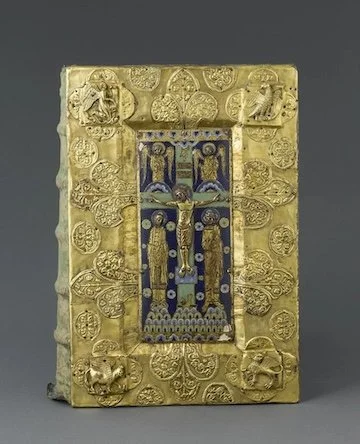
Board covered with a repoussé copper plate, 14th-century.
Centre: enamel crucifix, circa 1200,  ©RMN-GP

The Reading Room is currently restoring its extensive collection of gilt bindings, providing visitors with an opportunity to explore the unrivalled brilliance of the Duke of Aumale’s princely library.

Gold leaf became more widely used in bookmaking with the introduction of the codex – bound collections of folded sheets – and the rise of Christianity from the 4th century, which increased demand for ornate texts. This exhibition will feature a collection of extraordinary books, from medieval ecclesiastical treasures to royal and princely collections and prestigious 19th-century works, and reveal the remarkable quality of their decorations, the metals employed and the techniques used to bind, illuminate and write them.

Among the techniques used for gilt bindings are metal setting, embossing and filigree-work. From the 14th century, brocaded or embroidered fabric bindings began to feature gold and silver metallic threads, often embellished with silk thread. Leather was commonly employed for bindings from the 16th to the 19th centuries, and the Duke of Aumale’s collection contains examples of many different types of gilding techniques and designs, including gilt tracing for complex decorations and patterns.

Gilt and gauffered edges, hidden from view, were tooled with decorative patterns well into the 19th century.

As visitors move through the exhibition, they delve deeper into the book. Gold was also used on board backs, which were often covered with decorative leather or gilt endpapers, a common 18th-century practice. Gauffered papers, a speciality of Augsburg and Nuremberg, featured brass and alloys of zinc, copper, tin or even lead.

Gold was also used for illuminations to illustrate text and for letters. Among the rarest books in the exhibition are works printed with gold ink, including a 1482 edition of Euclid’s Elements by Erhard Ratdolt dedicated to the Doge of Venice, and an 1836 Gospel printed with gold letters on porcelain paper from the library of King Louis Philippe at Neuilly.

For more information, visit https://chateaudechantilly.fr/en/evenement/exhibition-gilded-books-treasures-of-the-duke-of-aumale/

Online Lecture: Creating Christian Sacred Spaces: The Armenian Case (4th–7th Centuries), Nazénie Garibian, 4 Nov. 2025, 12:00-1:30 PM ET (Zoom)

Online Lecture

Creating Christian Sacred Spaces: The Armenian Case (4th–7th Centuries)

Nazénie Garibian

The Mary Jaharis Center for Byzantine Art & Culture Lecture Series

Zoom

4 November 2025, 12:00 PM–1:30 PM ET

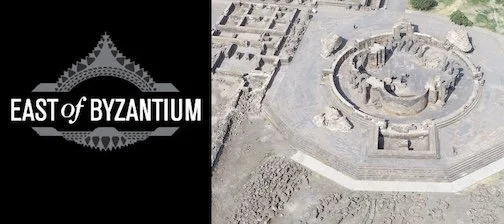
Archaeological Site of Zvartnots from above. Photo: Nazénie Garibian

Nazénie Garibian, Mesrop Mashtots Institute of Ancient Manuscripts Matenadaran and State Academy of Fine Arts of Armenia, explores the creation of Christian sacred spaces in Armenia, from its official conversion at the beginning of the 4th century to the definitive establishment of Arab rule at the end of the 7th century.

This lecture offers a case study on the creation of Christian sacred spaces in Armenia, from its official conversion at the beginning of the 4th century to the definitive establishment of Arab rule at the end of the 7th century. This is a complex and turbulent transitional period for all of Christendom, during which the gradual transformation of the religious landscape is carried out through the marking of both physical grounds and human minds, conceived as a single space of the Church. Accordingly, any theological concept relating to the Church in its universal and eternal sense becomes applicable to this space. However, Christianity was adopted in Armenia largely by adapting to the existing political and social structures, as well as to the previous local religious traditions. Moreover, the fluctuating historical conditions inherent to the contact zones between the Roman/Byzantine and Iranian worlds profoundly shaped the formation of Armenian Christian identity and thought. All these factors largely defined the specificities of the concept and architectural organization of Armenian sanctuaries in the period under consideration. 

The lecture is structured around three main themes. The first theme focuses on the foundation of Armenian ecclesiastical institutions connected with the earliest Christian sanctuaries. The latter’s establishment, character, and geographical distribution will be analyzed using source evidence and situated within the historical context of the region during the first decades of the 4th century. 

The second theme addresses the adoption in Armenia of sacred models originating from the Holy Land, particularly Jerusalem, with the aim of creating a ‘New Jerusalem’ in Armenia at the beginning of the 5th century. The theological motivations underlying this initiative will be examined within the context of the contemporary political situation. The Armenian case will also be compared with similar examples among neighboring Christian countries in the Caucasus. 

The third theme explores the development of major ecclesiastical complexes from the 4th to the 7th centuries, which served as the household and see of the Catholicoi of Armenia. Three selected examples – Ashtishat, Dvin, and Zvartnots – will be analyzed within the framework of a new urban concept: the ‘church-city’. Inheriting the tradition of the ancient ‘temple-towns’, the spatial organization and architecture of these religious centers were designed, drawing inspiration from the sacred model of Jerusalem perceived as quintessential Christian Temple, Church, and Holy City.

This lecture will take place live on Zoom, followed by a question and answer period. Please register to receive Zoom link.

For more information and to register, visit https://maryjahariscenter.org/events/creating-christian-sacred-spaces

Conference: Zooming In and Out: Reconsidering Hans Memling, Brugge, 20-21 November 2025

Conference

Zooming In and Out: Reconsidering Hans Memling

Auditorium BRUSK, Musea Brugge (Bruges, Belgium)

20-21 November 2025

To celebrate its opening in 2025, BRON Research Centre (Musea Brugge), in collaboration with the Royal Institute for Cultural Heritage (KIK-IRPA, Brussels), is organising a two-day conference on new and ongoing research on the oeuvre of Early Netherlandish painter Hans Memling.

In 2023 the first phase of the research project Closer to Memling commenced. Closer to Memling is a project initiated by Musea Brugge in collaboration with other institutions to thoroughly examine the 9 works by Hans Memling in its collection. The aim of this project and conference is to contextualise previous studies and stimulate new research on the painter in an interdisciplinary exchange between leading and new scholars in the field.

For more information and to register, visit https://www.museabrugge.be/en/collections/bron/bron_academy/zooming_in_and_out_memling#anchor-35182164

Call for Applications: Folger Institute Short-Term Fellowships, Due 15 Jan. 2026

Call for Applications

Folger Institute Short-Term Fellowships

Due 15 January 2026

Applications are open through January 15th, 2026 for Folger Institute Short-Term Fellowships!

Each year the Folger Institute awards research fellowships to create a high-powered, multidisciplinary community of inquiry. This community of researchers may come from different fields, and their projects may find different kinds of expression. But our researchers share cognate interests in the history and literature, art and performance, philosophy, religion, and politics of the early modern world.

Short-term fellowships support scholars whose work would benefit from significant primary research for one, two, or three months, with a monthly stipend of $5,000 per onsite month and $4,000 per virtual month. These fellowships are designed to support a concentrated period of full-time work on research projects that draw on the strengths of the Folger’s collections and programs.

For the 2026-27 fellowship year, short-term fellows will have the option to take their fellowship fully onsite, fully virtual, or a combination of the two. Applicants may propose any research schedule that best fits their project’s needs.

The deadline for short-term fellowship applications is January 15, 2026.

For more information, visit https://www.folger.edu/research/the-folger-institute/fellowships/apply-for-a-fellowship/short-term-fellowships/

Call for Applications: Postdoctoral fellowship for East Central European researchers in Gotha, Halle and Wolfenbüttel (3 months), Due by 31 October 2025

Call for Applications

Postdoctoral fellowship for East Central European researchers in Gotha, Halle and Wolfenbüttel (3 months)

Due by 31 October 2025

The Gotha Research Centre of the University of Erfurt, the Francke Foundations in Halle and the Herzog August Library in Wolfenbüttel can again award a three-month scholarship for 2026 to an excellent postdoctoral researcher from the East Central European region to research their holdings. The international scholarship programme is open to all historically oriented disciplines. It supports projects geared towards researching the holdings of all three institutions, linking them and relating them to each other. A central requirement of this programme is that the library holdings are essential to the proposed research project.

Further information about the scholarship can be found here: https://www.francke-halle.de/en/science/research-centre/postdoc-fellowship-east-central-europe

Call for Papers: Decentring Europe: Nordic–Iberian Histories in Transregional Perspective, 4th SWESP International Workshop, Gothenburg (21-22 May 2026), Due 15 Nov. 2025

Call for Papers

4th SWESP International Workshop

Decentring Europe: Nordic–Iberian Histories in Transregional Perspective

University of Gothenburg, 21-22 May 2026

Due 15 November 2025

The CFP for the 4th SWESP International Workshop has just been launched. With the title “Decentring Europe: Nordic–Iberian Histories in Transregional Perspective”, it will take place on 21-22 May 2026 at the University of Gothenburg.

The workshop is free of charge, and we offer partial bursaries to cover travel costs for doctoral students and early-career researchers with limited access to funding. Please see the attached CFP for details about how to apply for a bursary.

Conference Theme: This interdisciplinary conference seeks to explore the multifaceted connections and entanglements between the Nordic and Iberian worlds. Moving beyond traditional centre-periphery and modernisation narratives, the event aims to foster dialogue on how exchanges across these regions have shaped diplomatic, economic, political, and cultural networks from the late medieval period to the contemporary era. We welcome approaches from comparative and transnational history, histoire croisée (entangled history), and other interdisciplinary frameworks that examine both the continental lands and the overseas territories of these regions.

Topics: We invite contributions from a wide range of disciplines, including history, literature, arts, philosophy, and the social sciences. Topics may include, but are not limited to: Cross-regional diplomatic, religious, and military networks; Movements of people, goods, and ideas; political exile and migration; Comparative studies of governance, reform, and military/maritime infrastructures; Cultural exchange, translation, and artistic reception; Knowledge production and scientific transfer; Comparative gender, family, and welfare structures; Environmental and climatic histories; Transregional solidarities and intellectual entanglements.

Submission Guidelines: We encourage submissions that focus on specific historical periods or adopt cross-temporal perspectives. The workshop aims to illuminate the shared questions and conceptual paradigms that emerge from studying the Nordic and Iberian regions in relation to one another.

Key dates: Proposals should be sent in a Word or PDF document containing a title, a short abstract (max. 250 words), and the author’s name and affiliation to the organisers at swespnet@gmail.com no later than 15 November 2025. The results of the selection process will be communicated by 15 December 2025. If you wish to request a bursary, please include a short motivation letter (max. 250 words) explaining how attending the workshop may impact your career, with details of available funding.

Organising Committee: A. Jorge Aguilera-López (University of Helsinki), Enrique J. Corredera Nilsson (University of Bern), Lucila Mallart (Pompeu Fabra University, Barcelona), Kenneth Nyberg (University of Gothenburg), Ingmar Söhrman (University of Gothenburg).

Please see the full CFP here.

Call for Papers: The Medici and the Dominicans, Florence (20 Jan. 2026), Due by 15 Nov. 2025

Call for Papers

The Medici and the Dominicans

Friday, 30 January 2026

Palazzo Alberti, Florence

Due by 15 November 2025

In partnership with the the Library and Archive of Santa Maria Novella (Florence), the academic journal Memorie Domenicane, and the Leonine Commission (Paris), the Medici Archive Project is organizing a one-day conference on the relationship between the Medici (both the merchant-bankers of the quattrocento and the grand dukes of the later centuries) and the mendicant order founded by Dominic de Guzmán at the beginning of the thirteenth century.

This conference intends to reassess this complex relationship—sometimes symbiotic, often strained—that indelibly marked the history of Florence. Priority will be given to papers addressing the interpenetration between artistic production and patronage, religious dissent, political crises, book and print history, and humanist and scientific discourse. The organizers invite proposals for 20-minute unpublished papers in English or Italian, which address topics including, but not limited to:

  • Medici Presence at San Marco

  • Antonino Pierozzi: Patronage and Canonization

  • The Medici and Santa Maria Novella

  • The Medici Library and the Library at San Marco

  • The Medici and the Observant and Conventual conflict in the Quattrocento

  • The Studia of Florence and Pisa

  • Savonarola and Piagnonism

  • Neo-Piagnonism at the Time of the Medici Grand Dukes

  • Santa Caterina de' Ricci and the Convent of San Vincenzo in Prato

  • Cosimo I and the 1545 San Marco Crisis

  • Medici and Dominican Fonderie in Florence

  • Egnazio Danti and Mapmaking

  • The Medici Popes at Santa Maria Sopra Minerva in Rome

  • Plautilla Nelli and Santa Caterina da Siena in Florence

  • Paupertas, Majestas, and Simplicitas

  • The Dominicans in Florence during the "Forgotten Centuries"

The conference will take place at Palazzo Alberti in Florence on Friday, 30 January 2025.

To apply: please send an abstract (max 250 words) and a short bio (max 100 words) by 15 November 2025 to education@medici.org.
Successful applicants will be notified on 25 November 2025.

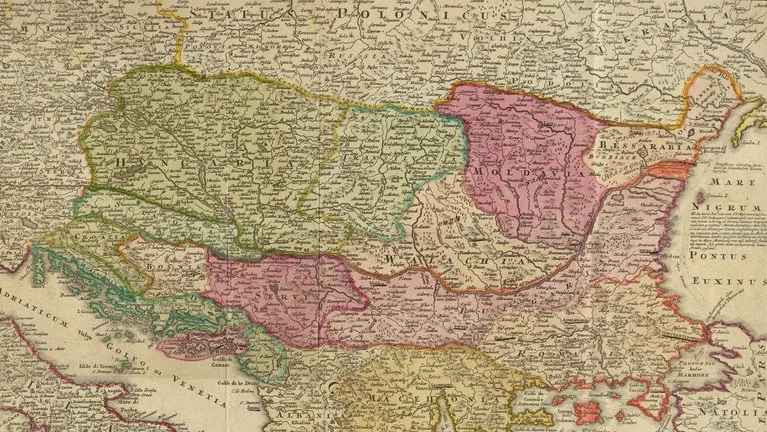
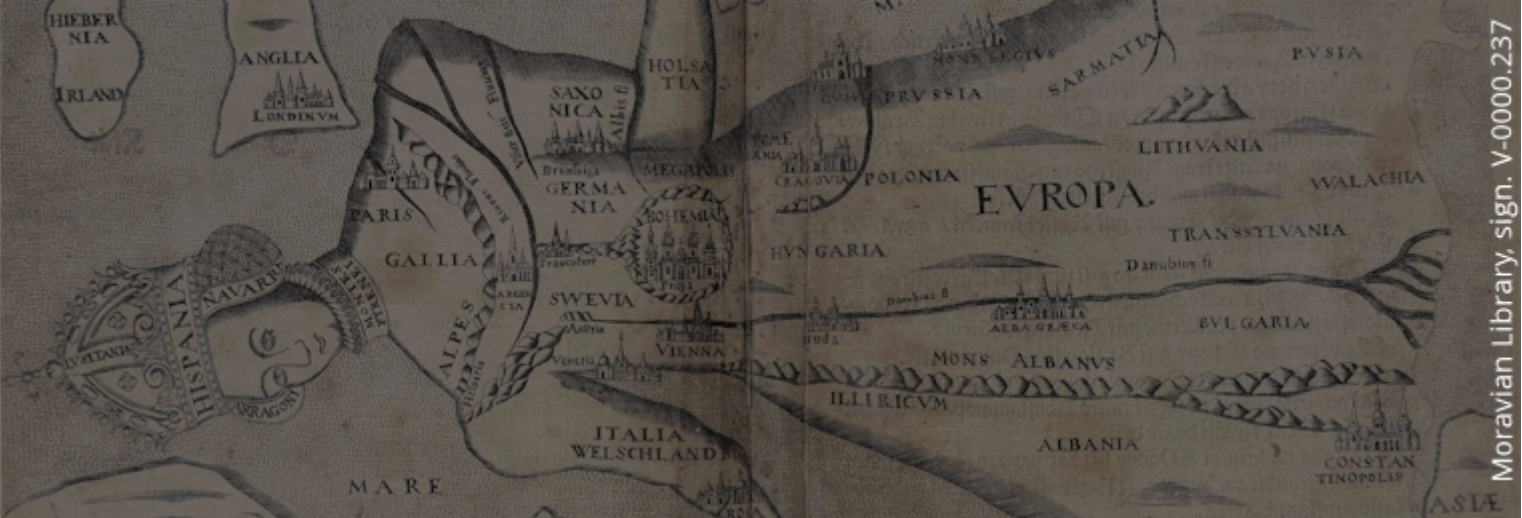
Call for Papers: Bridging the Past and Present in Cartography, 31st ICHC, Prague (7-11 July 2026), Due by 14 Nov. 2025

Call for Papers

Bridging the Past and Present in Cartography

31st International Conference on the History of Cartography (ICHC)

7-11 July 2026, Prague, Czech Republic

Due by 14 November 2025

The Faculty of Science of Charles University, the Institute of History of the Czech Academy of Sciences, the Moravian Library in Brno, the Faculty of Science of Masaryk University, and the Czech Geographical Society, under the auspices of the Czech Cartographic Society, are pleased to invite proposals for papers and posters for the

ICHC is the only academic conference solely dedicated to advancing knowledge of the history of maps and mapmaking, regardless of geographical region, language, period or topic. ICHC promotes free and unfettered global cooperation and collaboration among cartographic scholars from many academic disciplines, curators, collectors, dealers and institutions through illustrated lectures, presentations, exhibitions, and a social program. In order to expand awareness of issues and resources, each conference is sponsored by a leading educational and cultural institution.

The biennial conferences are organized in conjunction with Imago Mundi CIO. ICHC 2026 builds upon Czechia’s robust tradition of research in the history of cartography and related disciplines, a tradition that has flourished for more than a century.

Under the broad rubric of Bridging the Past and Present in Cartography, ICHC 2026 welcomes paper and poster presentations on the following themes:

  1. Maps and Tourism - Encompasses the role of maps and related works in promoting tourism to regions or particular destinations and in the experience of touristic places.

  2. Maps as Artefacts - Investigates the nature of maps as cultural object s that circulate within the marketplace and other networks, and that are variously collected and preserved within institutions of memory (GLAM).

  3. The Third Dimension: Representing Elevation on Maps - Explores the particular strategies developed to represent the earth’s crumpled surface of hills and valleys for specific tasks, from military and geological mapping to forest management.

  4. Mapping the Past: Historical Cartography at the Turn of the Digital Era- Pursues interdisciplinary and critical perspectives on the ideological implications of new digital technologies in mapping the past, including the risks of distortion and of the instrumentalisation of historical content for political or ideological purposes.

  5. And any other aspect of the history of cartography.

Key Dates

  • Opening of the call for papers: 15 July 2025

  • Deadline for submission of proposals: 14 November 2025

  • Notification of acceptance: 15 January 2026

  • Early Bird Registration: until 15 April 2026

Papers

Paper presentations will comprise 15 minutes for presentation, followed by a short discussion.

Posters

Posters will be installed for a dedicated session on the second morning of the conference and will remain on display through the remainder of the conference.

Panel Proposals

We welcome the proposal of organized sessions. However, proposals for paper presentations, whether by one or more presenters, must be submitted and evaluated individually. Therefore, if a proposed paper is intended for an organized session, please include the information at the end of the submission form. The session’s organizer must also submit a separate proposal for the session that lists all the papers and presenters.

For more information, visit https://ichc2026.org/

Call for Papers: 11th Conference of the Medieval Chronicle Society, Munich (27-30 July 2026), Due by 10 Nov. 2025

Call for Papers

11th Conference of the Medieval Chronicle Society

27th-30th July 2026

Munich, Germany

Due by 10 November 2025

The 11th international conference on the Medieval Chronicle will be held in Munich, Germany, in the week of 27-30 July 2026. Papers in English, French or German are invited on any aspect of the medieval chronicle. These can for example be related to form, function, questions regarding historiography or images. However, we especially encourage papers related to our special focus “Chronicle in Danger”. Themes to be addressed may include, but are not limited to:

  • Use and abuse of the chronicle, both in the Middle Ages and thereafter

  • Creation of crisis narratives in chronicles, including blaming, scapegoating, hate, compassion, and cohesion during crises

  • Gender, race, class and religion in the chronicle: concepts of othering and exclusion

  • Materiality of the chronicle and future perspectives concerning preservation and digitization

  • Challenges of ‘outdated’ editions and of editing chronicles in the 21st century

We welcome submissions for individual papers and sessions. Each session will be 90 minutes and consist of three papers. For a session proposal please include three papers and a chair. Conference papers will be strictly limited to 20 minutes in length. Please note that the conference will take place in person and no hybrid access can be provided.

The submission deadline for abstracts (maximum length 200 words per paper) and sessions is Monday, November 10th, 2025. Please submit abstracts through our online platform: https://doo.net/de-de/widget/189361/buchung?booking_widget_config_name=booking-18400-84682&organizerId=18400&locale=de-de

Notifications of acceptance will be given by the end of January 2026 and the registration will follow in spring 2026. We are estimating a conference fee of €90 (reduced rate €60 for PhD/graduate students) and additional fees for a day trip to Regensburg on Thursday, July 30th including a guided tour and a conference dinner. Travel and accommodation have to be covered and organized individually.

Contact: Florian Datz (florian.datz@lmu.de)

Organizers: Prof. Julia Burkhardt, Florian Datz, M.A., Prof. Eva Haverkamp-Rott, Dr. Paul Schweitzer-Martin (LMU Munich)

For more information, visit https://medievalchronicle.org/2025/05/21/call-for-papers-11th-conference-of-the-medieval-chronicle-society-27-30-july-2026/

In-person/Online Conference: The Challenge of Historical Distance Historicism and Anachronism in the Study of Art, Florence (In-Person) & Teams (Online), 6-7 Nov. 2025

In-person/online International conference

The Challenge of Historical Distance Historicism and Anachronism in the Study of Art

Nederlands Interuniversitair Kunsthistorisch Instituut (NIKI), Florence, Italy

6-7 November 2025

View the programme here

Click here to register for online attendance via Teams.

Click here to register for in-person attendance at the NIKI, located at Viale Evangelista Torricelli 5 in Florence.

How can art historians explore, understand, or even ‘feel’ the material evidence of the past? How can we approach the problem of historical distance, of our anachronistic nostalgia and our intellectual desire for pre-modern periods and artefacts? Can we inhabit the time of past artworks, or do artworks constantly re-construct their own times? What role do contemporary concerns play in our interpretations of the ancient, medieval, and early modern periods? Numerous recent publications have explored the study of the past through different lenses. They have complicated the idea of ‘historical contexts’ by showing the ability of artworks to simultaneously refer to various time periods. They have also encouraged cross-temporal and sometimes ahistorical interpretations of premodern artefacts in the light of modern theories and concerns. This conference will bridge the ‘historicist’ and ‘anachronist’ camp in an attempt to theorise the thorny issue of time which sits at the core of both history and art history. The conference is organised in celebration of the scholarship of Prof. Gervase Rosser and in honour of his retirement from the University of Oxford. It particularly celebrates Prof. Rosser’s prominence as both historian and art historian and his inspirational interrogation of both disciplines.

For more information, visit https://www.niki-florence.org/in-person-online-conference-the-challenge-of-historical-distance-historicism-and-anachronism/?lang=en

Call for Papers: Materialising the Holy. Matter, Senses, and Spiritual Experience in the Middle Ages (12th-15th century), Padua (6-8 May 2026), Due by 31 Oct. 2025

Call for Papers

4th International Multidisciplinary Conference of the Series ‘Experiencing the Sacred’

Materialising the Holy. Matter, Senses, and Spiritual Experience in the Middle Ages (12th-15th century)

University of Padua, 6-8 May 2026

Due by 31 October 2025

In recent years, the growing interest in materiality has shifted art-historical inquiry from a primary focus on images to the physical and material characteristics of objects themselves. No longer viewed merely as carriers of representation, materials have emerged as crucial sites of meaning. Seminal studies by Caroline Walker Bynum (1995, 2007, 2011) and Jean-Claude Bonne (1999) have challenged the traditional hierarchy that privileged image over matter, demonstrating that the substance and presence of devotional objects were integral to their significance. Bynum, in particular, highlighted the transformative qualities of bleeding hosts, relics, and images—objects that drew viewers’ attention as much to their materiality as to their iconography. In this perspective, the perception of sacred matter transcended symbolic or representational layers, creating an embodied and immediate nexus with the divine.

At the same time, as scholars have shown, philosophy and theology reshaped medieval understandings of perception. The recovery of Aristotle introduced new models of cognition in which sensory experience became the foundation of thought. As Michelle Karnes (2011) demonstrates, Scholastic Aristotelianism—mediated through Avicenna and Averroës – conceptualised perception as a phased process moving from sensation to abstraction. Thomas Aquinas systematised this framework, positing the existence of internal senses that mediated between bodily perception and spiritual apprehension (nihil est in intellectu quod non sit prius in sensu). This marked a decisive departure from Augustinian suspicion of the senses. Reframed through the Aristotelian virtue of temperance, sensory pleasures could instead be disciplined and elevated as instruments of knowledge and spiritual ascent (Newhauser 2007). These developments fostered what has been described as a “culture of sensation” (Bagnoli 2017), in which the body and its faculties became indispensable pathways to affective experience and, ultimately, to divine union.

Building on this dual reorientation toward matter and the senses, the ERC project SenSArt (2021–2026) has explored the interplay of art, material culture, and sensory experience in medieval Europe. Combining art history, sensory studies, material culture studies, and cognitive approaches, the project has analysed case studies across England, France, Italy, Spain, Germany, and the Low Countries, refining our understanding of how objects and the senses shaped spiritual practices across different communities, social groups and strata.

This concluding conference of SenSArt seeks to consolidate and expand this field of research by:

  • Broadening the range of materials under consideration, including those often overlooked such as clay, paper, or organic matter.

  • Examining the full spectrum of the five senses, moving beyond the traditional emphasis on sight and touch, and drawing on anthropological models of ‘intersensoriality’ (Howes 2011).

  • Broadening the geographical scope of analysis from its conventional focus on Central and Western Europe or the Mediterranean to encompass Eurasia, Africa, and other regions, thereby fostering cross-cultural and transcultural perspectives.

Possible topics may include (but are not limited to):

  • Philosophical and theological theories on matters and perception; what was considered matter;

  • Diverse devotional materials: host, chrism, wax, oils, wood, ashes, clay, silk, parchment, and their ritual applications;

  • Relics as matter: blood, milk, and other sacred substances emanating from saints’ remains or miraculous images;

  • Materials perceived as inherently divine: stone, wood, and marbles conceived as part of God’s creation;

  • Affect and emotion: sweetness, fear, disgust, joy, and other affective states mediated through material encounters;

  • Methodological reflections: intersensoriality, anthropology of the senses, conservation science, digital reconstructions;

  • Perceptions of materials: cultural hierarchies, comparative evaluations, and shifting meanings across contexts;

  • Vision beyond “the image”: sheen, translucency, brilliance, and darkness; optical theories and material effects;

  • Curative powers of matter: the bodily and spiritual healing properties attributed to substances;

  • Objecthood and/or thingness, affordance & agency: how the choice of materials influenced the perception and devotional use of objects;

  • Immaterial and/or intangible elements in dialogue with matter: light, sound, as well as odours or smoke, as sensory extensions of material presence.

We welcome proposals for 25-minute papers in English or Italian. While the primary focus is on objects, multidisciplinary approaches are strongly encouraged, including contributions that engage with broader theories and concepts.

By October 31st please submit to the conference organizers Zuleika Murat (zuleika.murat@unipd.it), Valentina Baradel (valentina.baradel@unipd.it), Vittorio Frighetto (vittorio.frighetto@phd.unipd.it) and Teresa Martínez Martínez (teresa.martinez@unipd.it): full name, current affiliation (if applicable), and email address; paper title of maximum 15 words; abstracts of maximum 300 words; a biography of maximum 500 words; three to five key-words.
Notifications of acceptance will be given by November 15th.

Selected papers will be invited for publication in a collective volume in the Brepols series “The Senses and Material Culture in a Global Perspective’’.

For more information, visit https://sensartproject.eu/call-for-papers-for-materialising-the-holy-matter-senses-and-spiritual-experience-in-the-middle-ages-12th-15th-century-university-of-padua-6-8-may-2026/
Call for Papers: levating the Word. Bimah – Ambo – Minbar – Pulpit as Spaces of Sacred Speech, Munich (22-23 July 2026), Due by 31 Oct. 2025

Call for Papers

levating the Word. Bimah – Ambo – Minbar – Pulpit as Spaces of Sacred Speech

Zentralinstitut für Kunstgeschichte, Munich, July 22–23, 2026

due by 31 October 2025

International Conference, organizers: Prof. Dr. Joanna Olchawa, Dr. des. Ella Beaucamp (Ludwig Maximilian University of Munich)

The Word was at the center of religious practice in the medieval sacred sphere. Its proclamation found a privileged stage in different forms depending on time, culture, and confession: the Jewish bimah, the Christian-liturgical ambo, the Islamic minbar, and the Christian (preaching-)pulpit. From these sites, theological messages, as well as moral instructions, practical guidance, and community announcements, were delivered in performative acts designed to resonate with audiences as intersensory, and therefore more memorable, experiences. The effectiveness relied not only on voice, performance, and content of the spoken word, but also on the architecturally defined, liturgically embedded, and symbolically charged settings from which it was proclaimed. Viewed as dynamic components of religious communication rather than solely as art-historical objects, these sites reveal striking acoustic, aural, oral, and audiovisual facets.

This conference focuses on Bimah, Ambo, Minbar, and Pulpit as central stages of religious communication, with particular attention to their sonic dimensions. Drawing on textual, visual, and material evidence, we ask how these sites supported and actively shaped the transmission and reception of sacred content across the three monotheistic traditions. Which visual strategies predominated, to what extent were they guided by official norms or conventional practices, and when did artistic innovation occur? What pictorial programs, ornaments, and inscriptions up to c. 1500 CE deliberately addressed the preacher or the assembled audience? How was the spoken word shaped by acoustic and architectural features, and how was its resonance intensified in interplay with the visible? Who commissioned these works: specific donor circles, religious authorities, or even the auditorium itself, who appropriated and reshaped these spaces according to their expectations and needs?

Submission instructions

We invite proposals for case studies as well as transcultural and transreligious comparisons from art history and related disciplines (including religious studies and theology). Please submit an abstract of approx. 300 words (in German or English) and a short CV by October 31, 2025 to joanna.olchawa@lmu.de and ella.beaucamp@lmu.de

Travel and accommodation expenses will be covered. 

The publication of the conference proceedings is planned.

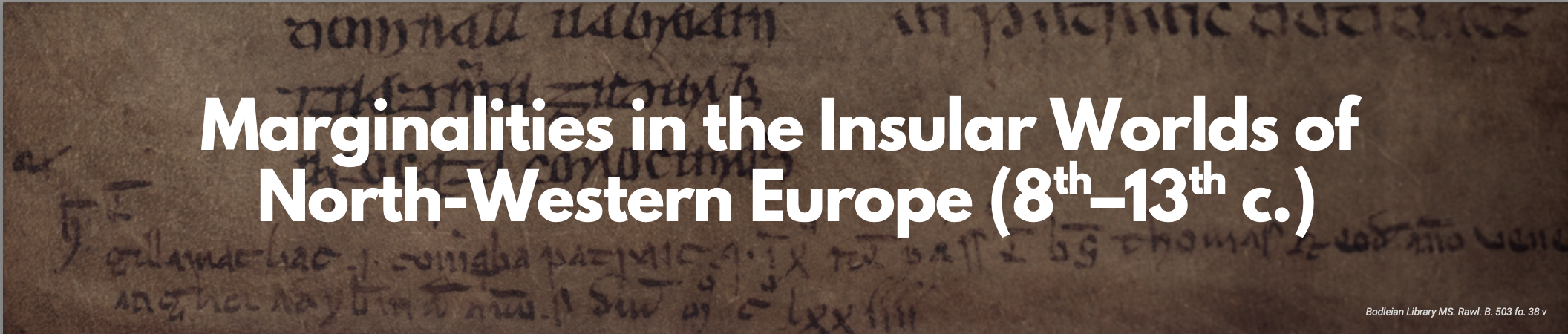
Call for Papers: Marginalities in the Insular Worlds of North-Western Europe (8th –13th c.), University of Caen (12 June 2026), Due by 7 Nov. 2025

Call for Papers

Marginalities in the Insular Worlds of North-Western Europe (8th –13th c.)

FRIDAY, 12 JUNE 2026

UNIVERSITY OF CAEN / CRAHAM (FRANCE)

Due by 7 November 2025

The CRAHAM invite proposals for papers for a conference exploring the theme of marginalities in the insular worlds of North-Western Europe from the 8th to 13th centuries. This event aims to foster critical analysis of the processes, identities and representations that may have contributed to defining, structuring or even blurring the boundaries of inclusion and exclusion in medieval insular societies, with a particular emphasis on Britain and Ireland.

We are seeking contributions grounded in historical, literary, archaeological and/or interdisciplinary approaches that interrogate the experiences and perceptions of those situated at the margins of medieval society, whether socially, culturally, ideologically, or economically.

We strongly encourage analyses that approach marginality through the lens of intersectionality, recognising how multiple, overlapping identities shaped unique experiences at the margins. Contributors may also wish to question both the degree of marginalisation, exploring the spectrum from partial exclusion to profound social isolation. They may also consider the necessity or function of marginalised people within medieval societies.

Subjects may include (but are not limited to):

  • Gendered and sexual marginalities

  • Religious minorities, non-conformist spiritualities

  • Migrants, exiles

  • Individuals marginalized by the law

  • Disabilities (physical, mental, cognitive, psychological, sensory)

  • Marginal voices in legal, literary, or documentary sources

  • Representations of difference and exclusion

  • Networks and strategies of adaptation among marginal groups

Proposals (200 words maximum) as well as a short CV and a biography should be sent to sarah.vincent@unicaen.fr and to jocelyn.coulon@unicaen.fr before 7 November 2025. Informal inquiries are also welcome. Please note that the presentations will last 30 minutes and will be followed by a 15-minutes time for questions. We are aiming for publishing the papers in a French medieval studies journal. Priority will be given to in-person presentations. Accommodation and meals will be provided for confirmed speakers, but travel costs should be covered by your own institution.

We invite scholars at all stages, particularly early career researchers and PhD students, to contribute to a dynamic dialogue that will expand, challenge, and enrich current perspectives on marginalities in medieval insular worlds. We look forward to receiving innovative proposals and to fostering meaningful intellectual exchanges in Caen.

For a PDF of the call for papers, click here.

Call for Papers: Memory and Medieval Material Culture, The Courtauld Medieval Postgraduate Colloquium, London (6 Mar. 2026), Due by 14 Dec. 2025

Call for Papers

The Courtauld Medieval Postgraduate Colloquium

Memory and Medieval Material Culture

Friday 6 March 2026, London, UK

Due by 14 December 2025

Royal 14 B VI, genealogical roll of the kings of England, 1300-8, f. 7, British Library, London. Image: Wikimedia Commons.

In our digital age, memory is both permanent and fleeting: forever enshrined on the internet, and yet easily forgotten amid the endless scroll of new information. In the Middle Ages, however, memory was more consciously articulated by medieval makers, patrons and viewers, and was appropriated to serve carefully crafted political, devotional and cultural agendas. Far from being passive repositories of remembrance, medieval artworks, buildings and objects played active roles in constructing, shaping and transmitting memory, whether personal, collective or institutional. This colloquium invites papers that explore the complex and dynamic relationship between memory and the material culture of the Middle Ages. It seeks to consider how images from medieval Europe, Byzantium and the Islamic world engaged with the processes of remembering and forgetting, and how they mediated the relationship between the past and the present.

We invite submissions for 20-minute papers that investigate the relationships between memory, objects and buildings, as well as those involved in making, commissioning and viewing them. Respondents might consider themes including but by no means limited to:
● The role of images in preserving, rewriting or reframing the past, and in creating, re-creating and reinforcing memory
● Agendas of patronage and the politics of remembering and forgetting in the construction of memory
● Death, commemoration and the visual cultures of remembrance
● Genealogy, dynastic representation and strategies of commemoration
● Architecture, monuments and urban spaces as sites of shared or contested memory
● The staging and restaging of memory in rituals and processions
● The transmission of memory across geographical, cultural and temporal boundaries
● The afterlives of medieval images and their role in shaping modern memory of the Middle Ages

We invite PhD candidates to submit an up to 250-word paper proposal and title, a short CV, together with their complete contact details (full name, email, and institutional affiliation) by 14 December 2025. Please send these to Sophia Dumoulin (sophia.dumoulin@courtauld.ac.uk).

There may be some limited funding to support travel and accommodation costs for those without institutional support. If you would require funding support, please include a brief budget alongside your abstract.

For a copy of the call for papers, click here.

For more information online, visit https://courtauld.ac.uk/research/the-research-forum/calls-for-papers/call-for-papers-memory-and-the-medieval-image/

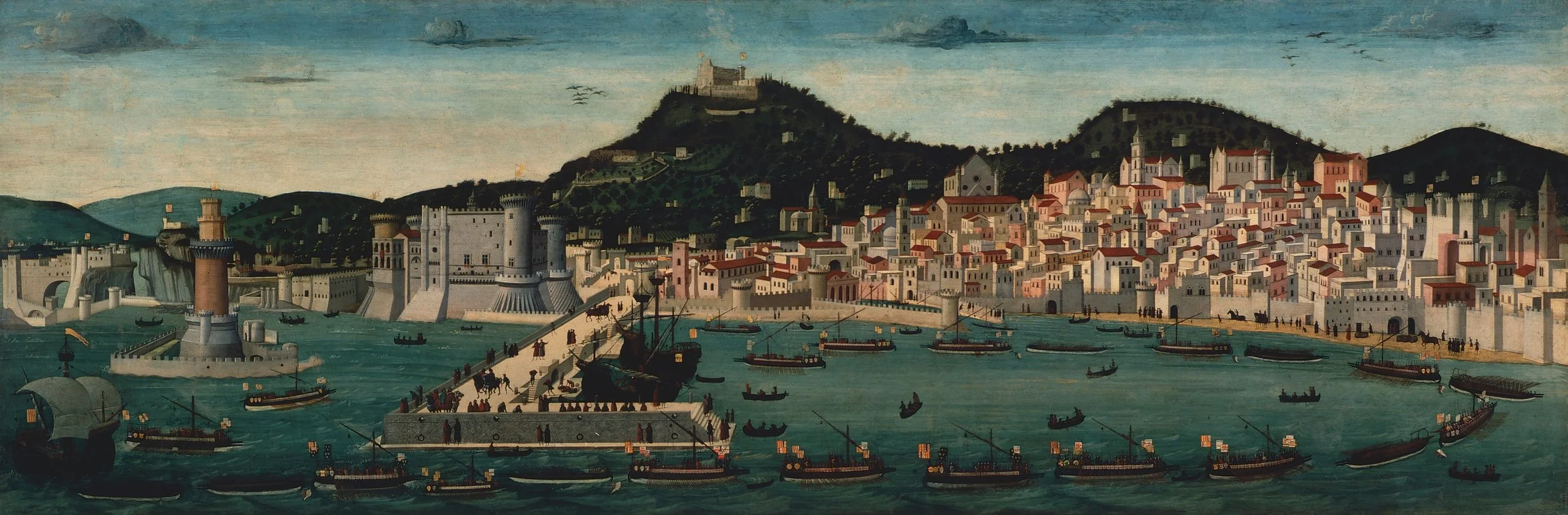
Call for Applications: 2026-2027 Predoctoral Research Residencies at La Capraia, Naples, Due by 31 Jan. 2026

Call for Applications

2026-2027 Predoctoral Research Residencies at La Capraia, Naples

Due by 31 January 2026

Founded in 2018, the Center for the Art and Architectural History of Port Cities “La Capraia” (Centro per la Storia dell’Arte e dell’Architettura delle Città Portuali “La Capraia”) is a collaboration between the Museo e Real Bosco di Capodimonte, the Edith O’Donnell Institute of Art History at the University of Texas at Dallas, Franklin University Switzerland, and the Amici di Capodimonte.

Housed in “La Capraia,” a rustic eighteenth-century agricultural building at the heart of the Bosco di Capodimonte, the Center engages the Museo di Capodimonte and the city of Naples as a laboratory for new research in the cultural histories of port cities and the mobilities of artworks, people, technologies, and ideas. Global in scope, research at La Capraia is grounded in direct study of objects, sites, collections, and archives in Naples and southern Italy. Through site-based seminars and conferences, collaborative projects with partner institutions, and research residencies for graduate students, La Capraia fosters research on Naples and southern Italy as a site of cultural encounter, exchange, and transformation, and cultivates a network of scholars working at the intersection of the global and the local.

The Advisory Committee of the Center for the Art and Architectural History of Port Cities “La Capraia” invites applications for 2026-2027 Research Residencies for PhD students carrying out research for their dissertations. Projects, which may be interdisciplinary, may focus on art and architectural history, archaeology, histories of collecting, technical art history, cultural heritage, the digital humanities, music history, or related fields, from antiquity to the present. Projects should address the cultural histories of Naples and southern Italy as a center of exchange, encounter, and transformation, and, importantly, make meaningful use of local research materials including artworks, sites, archives, and libraries. We welcome applications for projects that engage with histories of the collections and grounds of Capodimonte, and/or artworks and monuments held there. Projects in the earlier phases of research are preferred.

All materials, including letters of recommendation, are due by January 31, 2026.

Read the full Call and learn how to apply at https://utdallas.box.com/v/LaCapraiaCall2026-2027